The Woman Who Invented the Paper Bag Changed What Americans Could Carry Home for Dinner
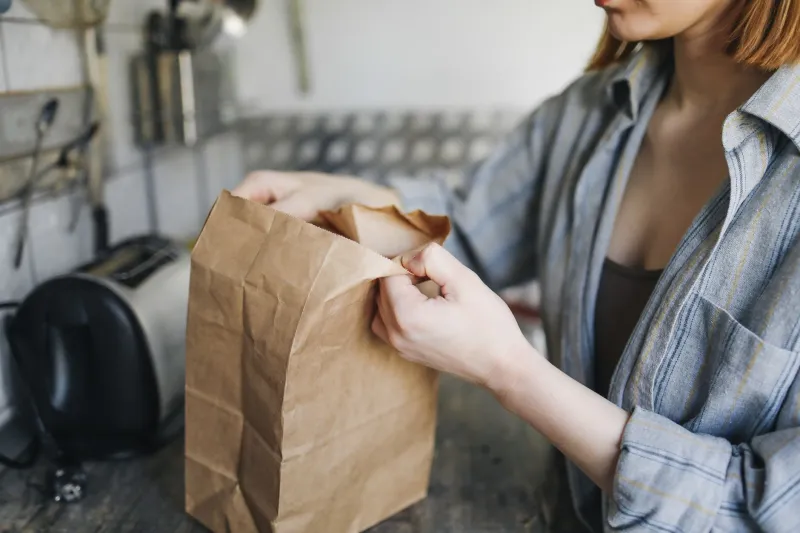
Think about the last time you grabbed a bag of groceries off a counter without a second thought. You probably didn't pause to consider the architecture of that bag — the flat bottom, the squared sides, the way it stands up on its own like it was born knowing its purpose. That design wasn't obvious. It took decades of failed attempts, one remarkable woman, and a patent office that almost missed the whole thing.
Before the flat-bottomed paper bag existed, Americans were improvising. Cloth sacks, newspaper folded into crude cones, baskets carried from home and back again — these were the containers that defined how people brought food into their kitchens. And here's the thing nobody talks about: when your container is awkward, you buy less. When you buy less, you shop more often. When you shop more often, the whole rhythm of eating changes.
What Came Before the Bag
In the mid-1800s, American grocery shopping looked almost nothing like it does today. Most people lived close enough to markets and general stores that they shopped daily or every other day, picking up small quantities of flour, salt, dried beans, and whatever else was available. This wasn't just habit — it was physics. You could only carry what your arms and containers allowed.
Paper bags did exist before 1870, but they were closer to paper envelopes — flat, floppy, and entirely useless for anything heavier than a handful of penny candy. They collapsed under weight. They couldn't stand upright. Storekeepers hated them because they slowed everything down and made a mess of shelves.
A few inventors tried to solve the problem with machines that could fold and glue paper into something sturdier. But the bags they produced were still envelope-shaped, still frustrating, still limited.
Margaret Knight and the Machine That Changed Everything
In 1868, a woman named Margaret Knight — already an experienced inventor who had previously designed a safety device for textile looms — started working on a machine that could cut, fold, and glue paper into flat-bottomed bags automatically. She built a working wooden model, then had it recreated in iron so she could patent it properly.
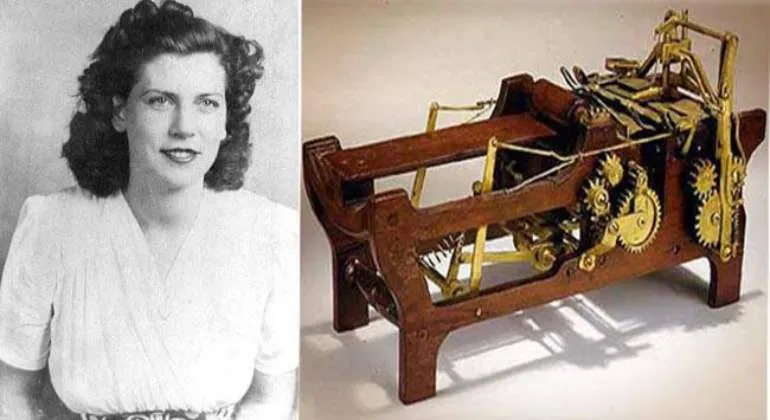 Photo: Margaret Knight, via www.fotolog.com
Then a man named Charles Annan saw her iron prototype, copied the design, and filed his own patent first.
 Photo: Charles Annan, via wearevuka.com
Knight sued him. In 1871, she won — and the patent for the flat-bottomed paper bag machine became hers. It was one of the earliest successful patent disputes won by a woman in American history, and almost nobody knows her name today.
The bags her machine produced were different in a way that mattered enormously. They stood up. They held volume. They didn't collapse when you put a pound of sugar inside them. For the first time, a container existed that could actually hold a meaningful quantity of groceries without requiring the shopper to bring their own vessel from home.
How a Container Reshaped a Shopping Habit
It sounds almost too simple: a better bag made people buy more. But the downstream effects were surprisingly far-reaching.
As flat-bottomed paper bags became standard in stores through the 1870s and 1880s, shopping patterns began to shift. Customers who once bought flour by the small scoop started buying it by the pound. Merchants who once hand-wrapped every purchase in paper and twine could now hand a filled bag across the counter in seconds. Transactions got faster. Throughput increased. Stores could serve more customers in a day.
This efficiency quietly encouraged stores to stock more variety. If customers could carry more home, it was worth offering more things to carry. The bag didn't create the grocery store as we know it — that would take refrigeration, the automobile, and a few more decades — but it planted an early seed in the logic of retail abundance.
It also began to change the psychology of what a reasonable amount of food looked like. A bag you could fill was a bag you were implicitly invited to fill. Portion thinking started to expand.
From the Counter to the Cart
By the early twentieth century, paper bags had become so standard that they were practically invisible — which is exactly what a good piece of infrastructure does. It disappears into the background of daily life until you can't imagine the world without it.
When self-service grocery stores began appearing in the 1910s and 1920s, replacing the old counter-service model where a clerk fetched everything for you, the paper bag was already there waiting. Customers who now moved through aisles picking items off shelves needed somewhere to put things, and the bag filled that role naturally.
The shopping cart arrived in 1937, and suddenly Americans could buy even more — but the bag was still there at the end of the trip, holding it all together for the walk to the car.
The Bag We Take for Granted
Margaret Knight went on to file more than two dozen patents across her lifetime, covering everything from rotary engines to window frames. She was prolific, practical, and almost entirely forgotten by the time she died in 1914.
But the flat-bottomed paper bag she fought to protect outlasted her by more than a century. It shaped the architecture of grocery stores, the expectations of shoppers, and the basic logic of how Americans think about bringing food home. Today we debate plastic versus paper, reusable versus disposable, and whether bags should cost a dime at checkout.
None of that debate would exist without a woman in 1871 who looked at a floppy paper envelope and decided it wasn't good enough.