One Newspaper Column Convinced Middle-Class Americans That Eating Simply Was Embarrassing

Photo: JFK Library, Public domain, via Wikimedia Commons
At some point in the mid-1960s, something shifted in how a certain kind of American thought about dinner. Not the food itself, exactly — though that changed too — but the weight attached to it. The judgment. The sense that what you served at a dinner party said something important about who you were as a person, what you'd read, where you'd traveled, how seriously you took life.
This did not happen organically. It was, in large part, manufactured. And it can be traced with unusual precision to a handful of people, a single newspaper column, and a public television show that aired in Boston.
What American Fine Dining Actually Looked Like Before
To understand what changed, you have to understand what came before — and resist the temptation to romanticize it.
In the early 1950s, the American restaurant landscape was divided roughly into two categories: everyday diners and lunch counters on one end, and steakhouses and hotel dining rooms on the other. The upscale end of that spectrum was defined almost entirely by quantity and protein. A good meal meant a large cut of meat, a starch, a vegetable that had been cooked until it stopped being a vegetable, and perhaps a wedge salad. Wine was something Europeans drank. Dessert was pie.
French cuisine existed in America — there were French restaurants in New York and a few other major cities — but they occupied a peculiar cultural position. They were associated with wealth and foreignness in equal measure, and not always in a flattering way. Many middle-class Americans viewed elaborate French cooking with a suspicion that blended genuine unfamiliarity with a distinctly American distrust of anything that seemed overly fussy or pretentious.
Food criticism, as a serious journalistic form, barely existed. Restaurant reviews were largely promotional — the kind of copy that appeared in local papers and read more like paid advertising than editorial judgment.
Craig Claiborne and the Introduction of Standards
When Craig Claiborne was hired as the food editor of the New York Times in 1957, he brought something the American food press had never really had: a framework.
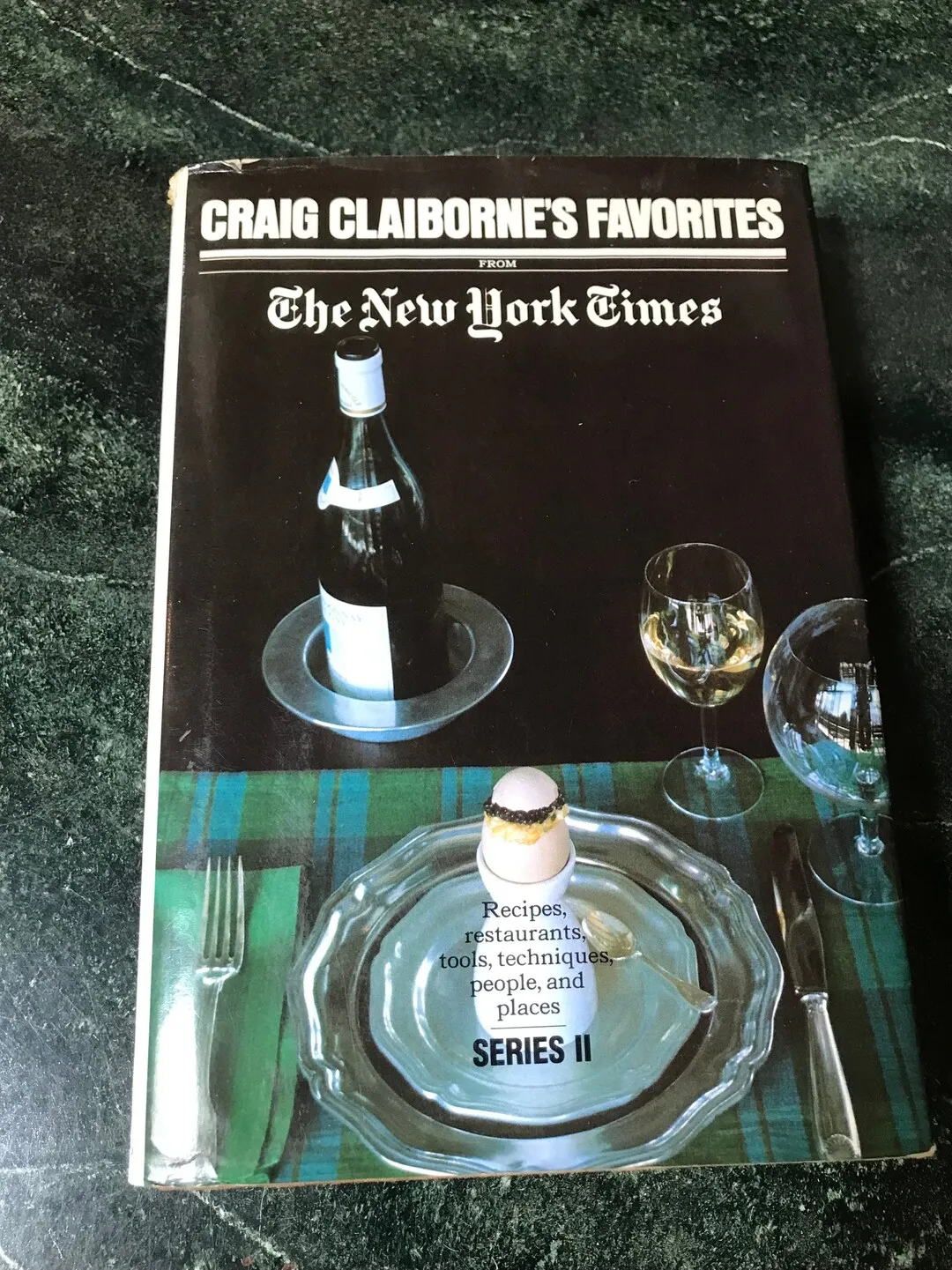 Photo: Craig Claiborne, via i.etsystatic.com
Claiborne had trained at a hotel school in Lausanne, Switzerland. He understood French culinary tradition not as a vague cultural signifier but as a specific technical system with rules, vocabulary, and hierarchies. And he wrote about food the way a serious critic writes about theater or art — with judgment, with criteria, with the implicit suggestion that some things were better than others and that the difference mattered.
His reviews introduced Times readers to a way of evaluating a meal that had nothing to do with portion size or price. He wrote about technique. He distinguished between a properly made sauce and a shortcut. He named specific dishes and explained why they succeeded or failed. He awarded stars.
For readers who had never thought about food this way, the effect was quietly disorienting. Claiborne wasn't just recommending restaurants. He was establishing that there was a correct way to think about eating — and that most Americans, by implication, had not been thinking about it correctly.
Julia Child and the Democratization of Anxiety
Claiborne's influence was substantial but geographically concentrated. He wrote for a national newspaper, but his world was New York, and his readers were largely the educated, urban class that already had some exposure to the ideas he was promoting.
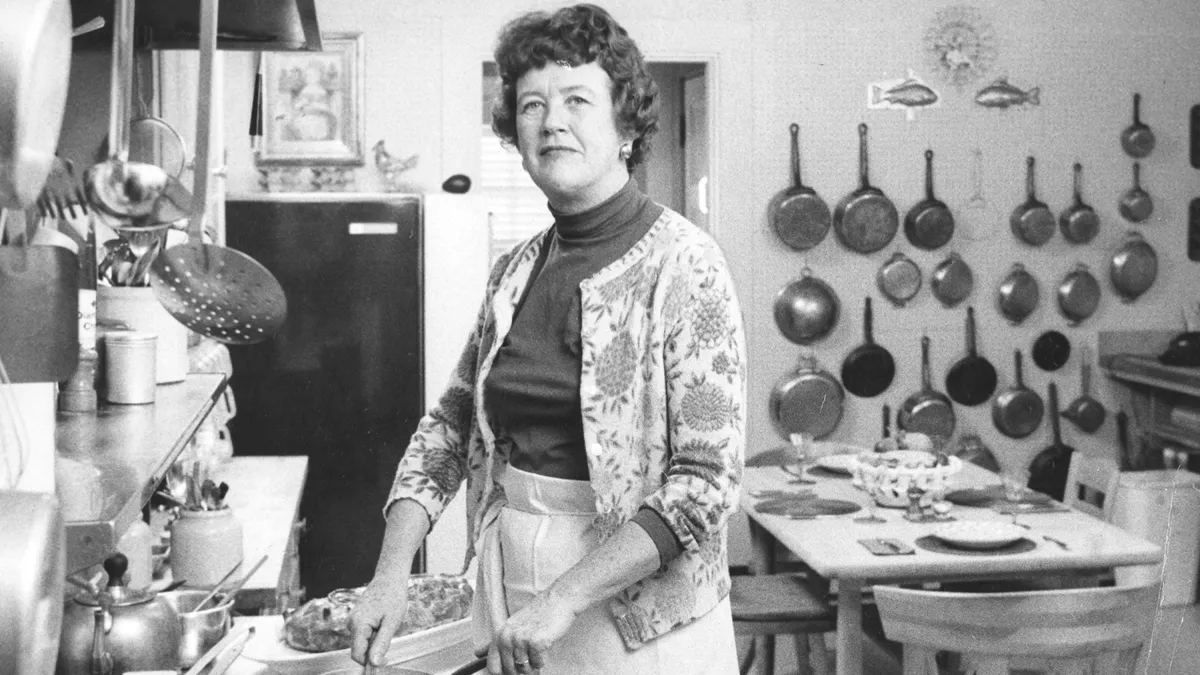 Photo: Julia Child, via media.cnn.com
Julia Child took those ideas into living rooms across the country.
When The French Chef debuted on WGBH Boston in 1963, it was ostensibly a cooking show. But it was also, whether intentionally or not, a weekly seminar on the idea that French cooking was the standard against which all other cooking should be measured. Child made French technique accessible and even funny — she was warm, self-deprecating, and genuinely fun to watch — but the underlying premise of the show was that mastering boeuf bourguignon and sole meunière was a worthwhile aspiration for the American home cook.
 Photo: WGBH Boston, via i.ytimg.com
The show was enormously popular. And it worked on multiple levels simultaneously. It taught viewers actual techniques. It made French culinary vocabulary familiar. And it embedded, gently but persistently, the notion that a well-cooked French meal represented a kind of achievement — cultural, intellectual, domestic — that a pot roast simply did not.
The Dinner Party as Status Performance
The combined effect of Claiborne's critical framework and Child's television presence was to create, within roughly a decade, a new set of social expectations around food that had not previously existed in middle-class American life.
By the late 1960s, a certain demographic of Americans — educated, suburban, aspirationally cosmopolitan — had absorbed the idea that what you served at a dinner party was a form of self-expression that could be evaluated and judged. Serving a roast chicken was fine. Serving poulet rôti with a properly reduced pan sauce was a statement.
This manufactured sophistication had real economic consequences. It created demand for specialty cookware, imported ingredients, and French wines that had previously been niche products. It justified higher prices at restaurants that could deploy the right vocabulary. It generated anxiety — and anxiety, in consumer culture, is extraordinarily productive. Anxious people buy things.
What Got Built on That Foundation
The American fine dining industry that exists today — with its tasting menus, its sommelier culture, its reverence for European technique, its elaborate ritual of service — was not a natural evolution. It was largely constructed in a single decade by a small number of tastemakers who had the platforms to define what sophistication meant.
Claiborne himself became more influential over time, not less. His annual lists of the best New York restaurants shaped where people ate and, by extension, which restaurants survived. His opinions had the force of institutional authority.
And somewhere in that process, the simple act of eating dinner became complicated in a way it had never quite been before. Not for everyone, and not all at once. But for a meaningful portion of the American middle class, food became something you could get wrong.
Which is a strange thing to do to dinner.