Breakfast, Lunch, and Dinner Weren't Always a Given — Here's Who Actually Decided You'd Eat Three Times a Day

Photo: Siddhesh Sawant, CC BY-SA 4.0, via Wikimedia Commons
Breakfast, Lunch, and Dinner Weren't Always a Given — Here's Who Actually Decided You'd Eat Three Times a Day
Somewhere between waking up and going to bed, you'll probably eat three times today. Maybe four, if you count a snack. You'll do it without giving the number much thought, because three meals a day is simply how eating works — it's the rhythm of American life, built into school schedules, work breaks, restaurant hours, and the structure of almost every cookbook ever written.
Except it isn't natural. It isn't biological. And for most of human history, it wasn't even normal.
The three-meal structure was built — assembled piece by piece over a few centuries by factory owners, religious reformers, nutritional authorities, and food companies — and once it was in place, it became so embedded in daily life that questioning it started to feel almost absurd. But the story of how it got there is worth knowing, because it says a lot about who shapes what we eat and why.
How Colonial Americans Actually Ate
In the early colonial period, most Americans ate twice a day. The structure was simple and practical: a substantial morning meal to fuel the day's work, and a large evening meal after the work was done. Midday eating happened, but it was informal — a piece of bread, some cheese, whatever was at hand — and wasn't treated as a distinct meal with any cultural weight behind it.
This two-meal pattern wasn't uniquely American. It was largely inherited from European peasant tradition, where the rhythm of agricultural labor dictated when and how much you ate. The idea of a formal midday meal was largely a class marker. Wealthy households with servants, flexible schedules, and large dining rooms could afford to make lunch into an occasion. Ordinary working people generally couldn't.
Mealtimes also varied enormously by region, season, and occupation. There was no national consensus about when dinner happened, whether breakfast was obligatory, or how many times a day a person ought to sit down to eat. The concept of a universal meal schedule simply hadn't occurred to anyone, because no one had the infrastructure or the motive to impose one.
The Factory Bell Changed Everything
The industrial revolution did more to restructure American eating than any chef, nutritionist, or food trend in history. When large numbers of people began working in factories in the early nineteenth century, their eating schedules stopped being personal decisions and became operational requirements.
Factory owners needed workers present at specific times. Machinery ran on fixed schedules. Shift changes had to be coordinated. And so the workday got divided into standardized blocks, with a defined midday break — typically thirty minutes to an hour — during which workers were expected to eat and return. That break, imposed by the logic of industrial production, created the American lunch.
This wasn't a gift to workers. It was a management tool. The lunch break existed because it was the minimum recovery time needed to keep people functional for an afternoon shift, not because employers had strong feelings about worker nutrition. But its effect on eating culture was enormous. Once millions of Americans were eating a midday meal at a fixed time every day, the three-meal structure started to feel like the natural order of things.
The Reformers Who Made It Moral
Industrial scheduling created the three-meal habit. Religious and moral reformers gave it a philosophical backbone.
Throughout the nineteenth century, a wave of health reformers — many of them with religious motivations — began arguing that regular, structured eating was not just practical but virtuous. Irregular eating was associated with laziness, excess, and moral disorder. Eating at consistent times, in proper quantities, at a proper table, was framed as a form of self-discipline that reflected good character.
Sylvester Graham, the man behind the Graham cracker, was one of the more influential voices in this movement. Graham preached a dietary philosophy that linked eating habits to spiritual health, and his ideas — however odd some of them were — helped cement the notion that meal structure was a matter of personal virtue, not just convenience.
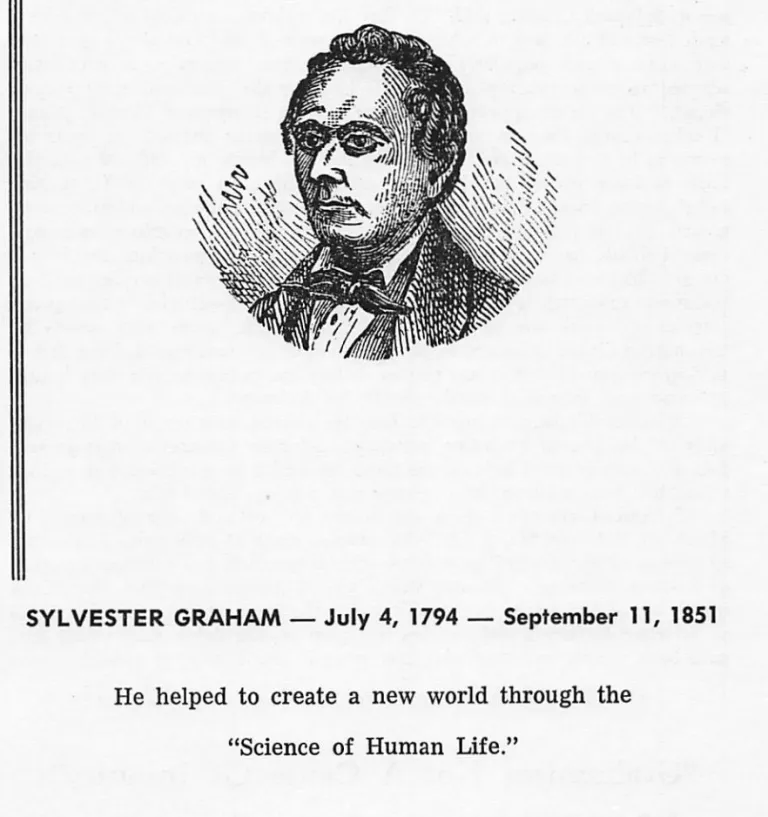 Photo: Sylvester Graham, via www.healthscience.org
John Harvey Kellogg, who would later become famous for his breakfast cereals, pushed similar ideas from a slightly different angle. Kellogg ran a sanitarium in Battle Creek, Michigan, and was deeply invested in the idea that a proper morning meal was essential to physical and moral health. His advocacy for breakfast as a non-negotiable daily ritual was, not coincidentally, excellent for the cereal business he was simultaneously building.
 Photo: Battle Creek, Michigan, via bcunlimited.org
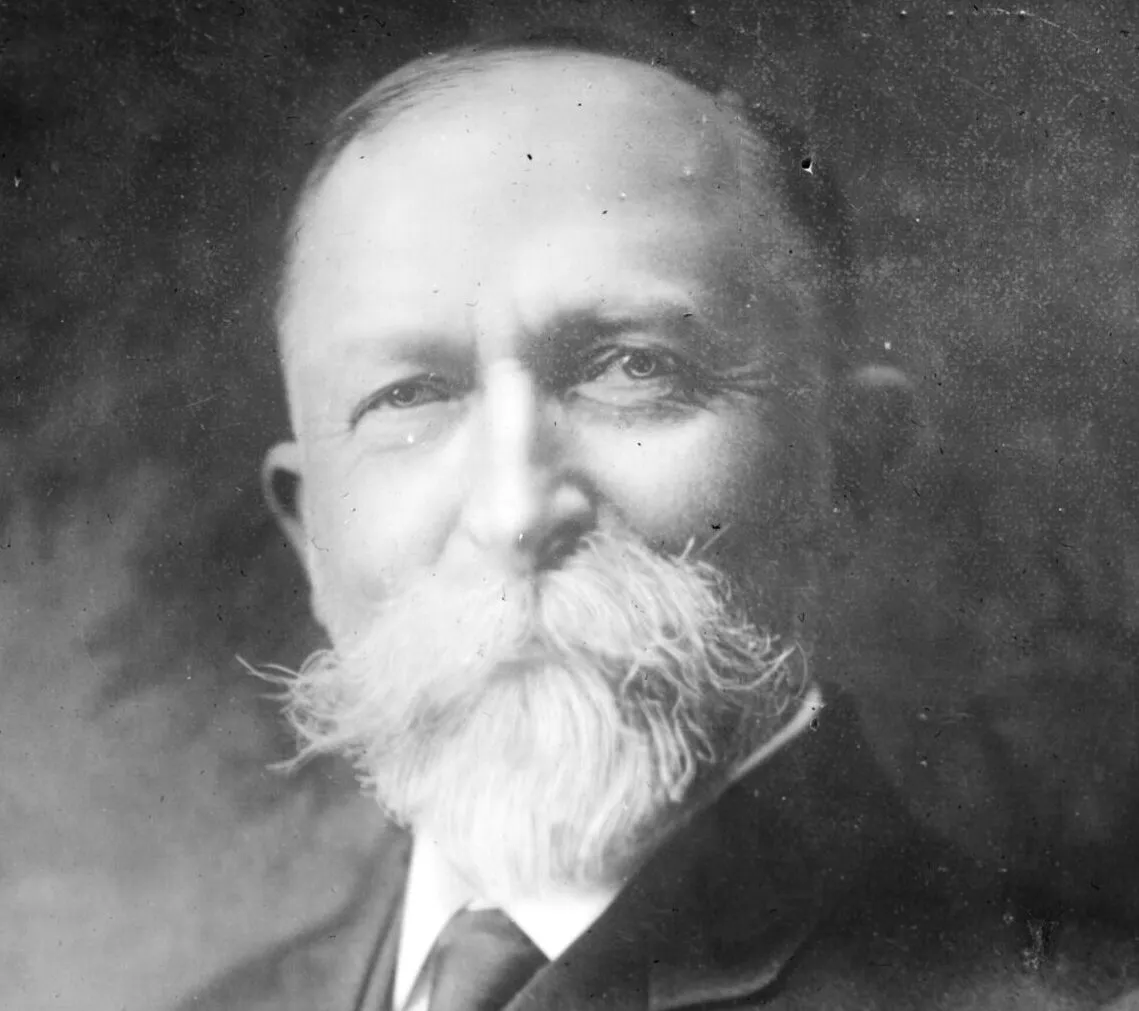 Photo: John Harvey Kellogg, via biographics.org
What the Food Industry Did With the Schedule
By the early twentieth century, the three-meal structure was largely established — but food companies recognized that a predictable eating schedule was an extraordinary commercial opportunity. If Americans ate breakfast every morning, there was a market for breakfast products. If lunch was a fixed daily event, there was a market for lunch foods. Dinner was the biggest meal, which meant the most expensive ingredients, the most elaborate preparations, and the most advertising dollars spent trying to influence what appeared on the table.
The processed food industry that grew rapidly after World War II was built almost entirely on the assumption of three meals a day. Cereal companies advertised directly to the breakfast slot. Soup and sandwich brands owned lunch. Frozen dinner manufacturers targeted the evening meal. Each food category had a meal to colonize, and the three-meal structure made that possible.
The message that eating fewer than three meals was unhealthy — that skipping breakfast was dangerous, that lunch was necessary for concentration, that dinner was the cornerstone of family life — was reinforced by both the food industry and by nutritional authorities who were sometimes funded by that same industry. The science was often real, but the urgency was frequently manufactured.
What Eating Looked Like Before the Schedule
Medieval Europeans often ate two meals: dinner around midday and supper in the evening. Ancient Romans typically ate one large meal in the afternoon, with light snacks at other times. Hunter-gatherer societies ate when food was available, which varied enormously by season and circumstance. The idea that the human body requires three meals, spaced roughly as we space them, is not well-supported by historical eating patterns across cultures.
Modern nutritional research has complicated the three-meal picture further. Intermittent fasting, time-restricted eating, and other approaches that diverge from the traditional three-meal schedule have gained significant scientific interest and popular following. None of this is to say three meals a day is wrong — for many people it works well. But it's worth recognizing that it's a structure, not a biological law.
The Schedule Is Still Running
School days are built around it. Work schedules accommodate it. Restaurants open and close according to it. The three-meal day is so embedded in American infrastructure that departing from it takes genuine effort — you have to swim against a current that was set in motion by factory managers and cereal entrepreneurs more than a century ago.
Next time you sit down for lunch, it's worth remembering that someone decided you'd be doing that. And they had reasons that had very little to do with hunger.