Your Medieval Ancestors Ate Their Napkins — And That's Actually the Most Civilized Part of the Story
Reach into any fast-food bag today and you'll find a stack of paper napkins — thin, disposable, and so commonplace that grabbing a handful feels like a basic human right. But these humble squares represent the endpoint of one of history's strangest eating evolution stories, one that begins with people literally consuming their table linens.
When Your Plate Was Tomorrow's Breakfast
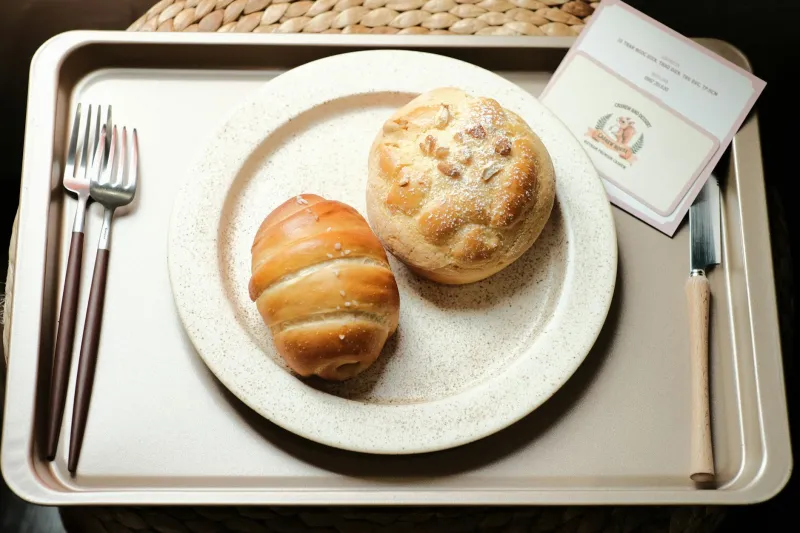
Medieval and early colonial diners didn't use plates as we understand them. Instead, they ate from "trenchers" — thick slabs of stale bread that served as edible dishware. These bread plates weren't just functional; they were integral to the dining experience.
A typical medieval meal worked like this: Servants would place day-old bread slabs in front of each diner. Food would be ladled directly onto these bread plates, which absorbed juices, sauces, and drippings throughout the meal. Diners would tear off pieces of the trencher to scoop up their food, using the bread simultaneously as utensil, napkin, and plate.
At meal's end, the food-soaked bread represented a substantial portion of the dining experience. Wealthy diners might eat their trenchers as a final course, essentially having dessert made from everything that had come before. More commonly, used trenchers were collected and distributed to servants, household staff, or the poor — a system that ensured nothing edible went to waste.
"The trencher system was remarkably efficient," explains medieval historian Caroline Walker Bynum. "It provided plates, absorbed spills, cleaned hands, and fed additional people. Modern dining creates far more waste while accomplishing less."
 Photo: Caroline Walker Bynum, via artandtheology.org
The Linen Revolution
As European dining culture grew more elaborate, wealthy households began supplementing bread trenchers with cloth napkins. These weren't the small squares we know today, but enormous pieces of linen draped across laps and shoulders. Dinner guests would arrive expecting to leave with sauce stains on their finest clothes.
Early American colonists brought this linen tradition across the Atlantic, but practical realities quickly intervened. Linen was expensive and difficult to clean in frontier conditions. Most colonial families owned only one or two cloth napkins, reserved for special occasions and important guests.
Ordinary meals returned to bread-based solutions, but with a distinctly American twist. Colonial bread trenchers were often smaller and thicker than their medieval predecessors, designed to be more portable and practical for families eating simple meals around basic wooden tables.
The Industrial Paper Solution
The paper napkin emerged not from dining innovation but from industrial necessity. In the early 1900s, American paper mills were producing enormous quantities of paper for newspapers, books, and packaging. Mill owners constantly sought new consumer markets to absorb their expanding production capacity.
The Scott Paper Company began experimenting with thin paper products for household use around 1907. Their first paper napkins were marketed not as dining accessories but as sanitary alternatives to shared cloth napkins in public spaces. Early advertisements emphasized hygiene over convenience, warning about the "invisible dangers" of reused linen.
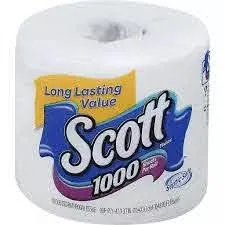 Photo: Scott Paper Company, via barkingdawgmarket.com
Restaurants adopted paper napkins quickly, but American families resisted. Many considered disposable napkins wasteful and inappropriate for home dining. The Great Depression temporarily reinforced this attitude — throwing away paper seemed frivolous when money was scarce.
Fast Food Changes Everything
World War II transformed American napkin culture permanently. Rationing made cloth napkins difficult to maintain, while paper products became symbols of modern efficiency. Military mess halls used paper napkins exclusively, creating habits that millions of returning veterans brought home.
The rise of fast food in the 1950s completed the transition. McDonald's, White Castle, and similar chains needed napkin solutions that were cheap, hygienic, and disposable. They ordered paper napkins by the millions, driving down costs and making them ubiquitous in American dining.
By 1960, the average American household used more paper napkins per week than their great-grandparents had used cloth napkins per year. The shift happened so quickly that many families stopped owning cloth napkins entirely.
The Glove Compartment Syndrome
Today's paper napkin culture reveals fascinating contradictions about American eating habits. We grab handfuls of napkins from dispensers, stuff extras into glove compartments and purse pockets, yet rarely use them all. Studies show that Americans discard roughly 60% of the napkins they take from restaurants.
This hoarding behavior makes perfect sense when viewed through historical context. Our ancestors lived with genuine scarcity — meals where nothing could be wasted, where even the plate became food for someone else. Modern abundance allows us to take "just in case" napkins without consequence, but our instincts still whisper that we might need them later.
The disappearance of cloth napkins from everyday home dining represents something deeper than convenience. It reflects how American families shifted from formal, ceremonial eating to casual, functional meals. Paper napkins enable the kind of quick, informal dining that defines modern American food culture.
What We Lost in Translation
Medieval trencher dining, for all its apparent primitiveness, created something beautiful: meals where nothing was wasted, where the table setting itself provided nourishment, where dining tools served multiple purposes throughout the experience.
Our paper napkin system is undeniably more sanitary and convenient, but it's also completely linear — take, use, discard. We've gained efficiency while losing the circular logic that made medieval dining simultaneously practical and poetic.
Next time you grab a handful of napkins from a fast-food dispenser, remember that you're participating in the final chapter of a story that began with people eating their dishes. The thin paper in your hand represents centuries of human ingenuity applied to the simple problem of keeping clean while eating — and the surprisingly complex question of what we're willing to throw away.