How Canada's Tree Blood Became America's Breakfast Obsession — Despite Most Americans Never Tasting the Real Thing
The Breakfast Lie on Every American Table
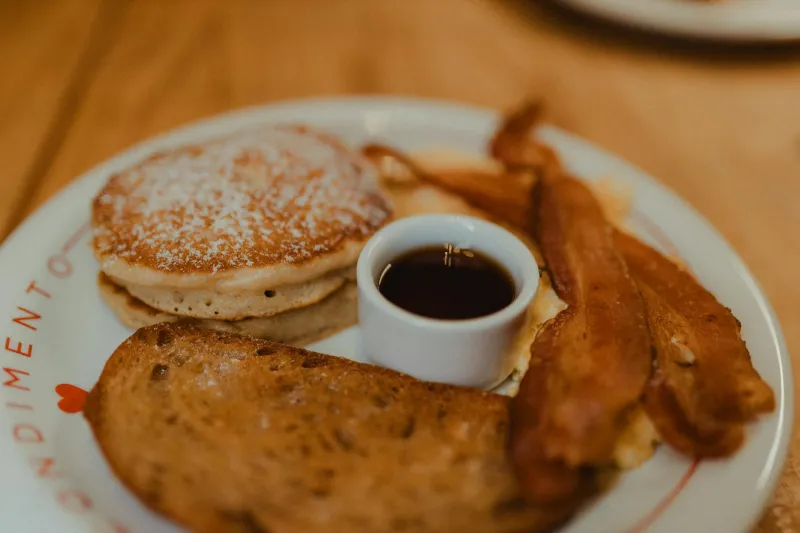
Walk into any American diner and you'll find bottles of "maple syrup" on every table, sitting next to the salt and pepper as if they're essential condiments of democracy itself. Order pancakes anywhere from Maine to California and the server will ask if you want "maple syrup" with the same casual assumption they'd ask about coffee.
Here's what they won't tell you: there's a 95% chance that "maple syrup" contains zero actual maple. Most of what Americans pour on their breakfast is corn syrup flavored with artificial maple extract — a sweet imposter that tastes nothing like the real thing.
The irony runs deeper. Canada produces 71% of the world's genuine maple syrup, with Vermont contributing most of the American supply. Yet somehow, this fundamentally Canadian product became so central to American breakfast culture that we've built an entire fake industry around imitating it rather than simply admitting we're obsessed with our northern neighbor's tree sap.
When Indigenous Wisdom Met Colonial Desperation
The story begins long before there was a border between Canada and the United States, in the sugar maple forests of northeastern North America. Indigenous peoples — primarily the Ojibwe, Potawatomi, and other Great Lakes tribes — had been harvesting maple sap for over 1,000 years before Europeans arrived.
Their process was ingenious in its simplicity. Each spring, as winter thawed into the maple trees' brief sap-running season, they would cut V-shaped gashes in tree bark and insert wooden spouts to direct the flowing sap into birchbark containers. The clear, slightly sweet liquid was then boiled down over open fires until it concentrated into thick, amber syrup.
This wasn't just food production — it was survival technology. Maple syrup provided essential calories during the lean period between winter food stores running low and spring plants becoming available. The concentrated sugar could be stored for months, traded with other tribes, or mixed with water to create an energy drink for long journeys.
When French explorers and fur traders encountered this process in the early 1600s, they were amazed. Europe's sugar came from expensive Caribbean plantations worked by enslaved labor. Here was a sweetener that literally flowed from trees, requiring no plantations, no slaves, no complex international trade networks — just knowledge, patience, and hard work.
The Colonial Sugar Crisis That Changed Everything
Maple syrup might have remained a regional curiosity if not for the economic pressures of colonial life. Throughout the 1600s and 1700s, sugar was brutally expensive in North America. Cane sugar had to be shipped from Caribbean plantations, making it a luxury that most colonial families could afford only occasionally.
This created a perfect market for maple syrup, especially in regions where sugar maples grew naturally. Colonial families learned the Indigenous techniques, often employing Native Americans to teach them the complex timing and methods required for successful syrup production.
The process was labor-intensive and seasonal. Maple sap only flows during a brief window in early spring when nighttime temperatures drop below freezing but daytime temperatures rise above 40°F. Miss this window, and you'd wait another year. Even during prime season, it takes roughly 40 gallons of sap to produce one gallon of syrup.
Despite these challenges, maple syrup production became essential to colonial survival in maple-growing regions. Families would organize "sugaring-off" parties, community gatherings where neighbors helped each other harvest sap and tend the boiling fires that ran day and night during syrup season.
By 1790, the United States was producing over 50 million pounds of maple sugar annually — more than the entire nation consumed of cane sugar. Maple had become America's primary sweetener, a position it would hold for nearly a century.
How Vermont Sold America a Sweet Dream
Vermont's transformation into America's maple syrup heartland wasn't inevitable — it was the result of brilliant 19th-century marketing that connected maple syrup to American identity in ways that persist today.
As cane sugar became cheaper and more available throughout the 1800s, maple syrup faced an existential crisis. Why spend weeks producing expensive tree sap when you could buy refined sugar at the general store? Vermont maple producers needed to convince Americans that their product offered something cane sugar couldn't: authenticity.
They succeeded by positioning maple syrup as the sweetener of "real" Americans — hardworking farmers who understood the value of natural products over industrial alternatives. Vermont maple became associated with rural virtue, seasonal traditions, and connection to the land. Eating maple syrup wasn't just consuming sugar; it was participating in an authentic American experience.
This marketing genius worked so well that it obscured a geographical reality: most of America's best maple syrup was actually being produced in Canada, where vast sugar maple forests and ideal climate conditions created perfect syrup-making territory.
Canadian producers were happy to let Vermont take credit for popularizing maple syrup in American culture, especially since American demand was driving their industry's growth. By 1900, Canadian maple farms were shipping millions of gallons south to satisfy American appetites that Vermont alone couldn't supply.
The Great Maple Syrup Fake-Out
The final twist in maple syrup's American story came through industrial food production. As corn syrup became cheap and abundant in the mid-20th century, food manufacturers discovered they could create "maple-flavored" syrups that cost a fraction of the real thing.
These imposters weren't necessarily trying to deceive consumers — they were solving a practical problem. Real maple syrup was expensive, seasonal, and had a complex flavor that some Americans found too intense. Corn syrup with maple flavoring offered consistent sweetness, year-round availability, and a milder taste that appealed to mass market preferences.
But the marketing remained rooted in maple authenticity. Brands like Log Cabin and Aunt Jemima (now Pearl Milling Company) used imagery of rural farms, log cabins, and traditional American breakfast scenes to sell products that contained no actual maple. The visual language of maple syrup became more powerful than the product itself.
This created the bizarre situation we have today: Americans consume "maple syrup" as a patriotic breakfast ritual while remaining largely ignorant of what real maple syrup actually tastes like. Most have never experienced the complex, nuanced flavor of genuine maple — the subtle vanilla notes, the mineral undertones, the way different grades offer distinct flavor profiles.
The $500 Million Misunderstanding
American maple syrup consumption now exceeds $500 million annually, making it one of our most beloved breakfast traditions. Yet this massive market is built on a fundamental misunderstanding of what maple syrup actually is and where it comes from.
Real maple syrup — the kind made from tree sap — represents less than 5% of American maple syrup consumption. The rest is corn syrup with artificial flavoring, sold in packages designed to evoke rural American authenticity while containing nothing authentically American except the marketing.
Meanwhile, Canada continues producing the world's finest maple syrup, much of which gets exported to the United States and sold at premium prices to the small percentage of Americans willing to pay for authenticity. Canadian maple farms have become tourist destinations where Americans travel to experience "real" maple syrup production — a strange pilgrimage to taste what we think we've been eating all along.
The Sweet Truth About American Breakfast
The next time you pour maple syrup on your pancakes, consider the remarkable journey that brought tree sap from Canadian forests to your American breakfast table. You're participating in a food tradition that spans Indigenous wisdom, colonial survival, nationalist marketing, and industrial deception — all wrapped up in one sweet, amber liquid that most Americans have never actually tasted in its authentic form.
Maple syrup's American story reveals something profound about how food traditions develop: they're often more about identity and marketing than geography or authenticity. We've made Canadian tree blood into an American breakfast icon, then replaced it with corn syrup while keeping the cultural significance intact.
It's a uniquely American approach to cuisine — taking something from elsewhere, claiming it as our own, then industrializing it beyond recognition while maintaining the emotional connection to what we imagine it represents. In that sense, fake maple syrup might be the most authentically American food product of all.