A Broken Bank Window Created the Drive-Thru — And Accidentally Launched America's Eat-in-Your-Car Revolution
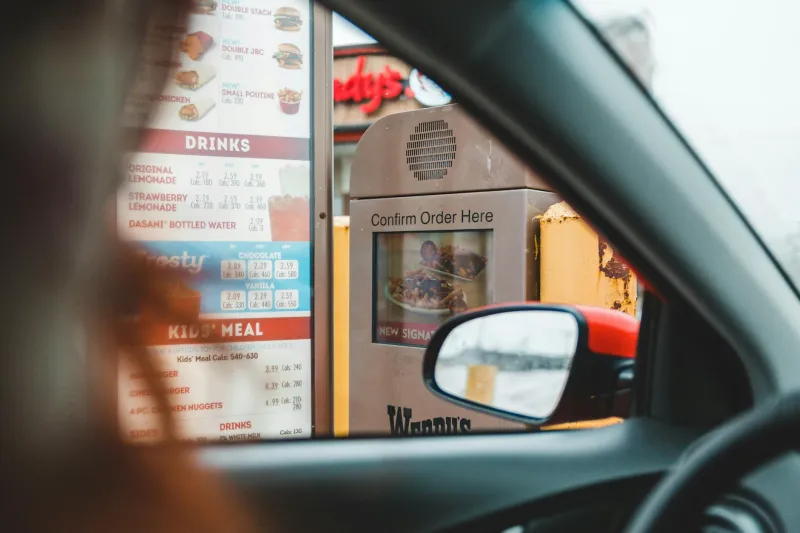
The Window That Changed How America Eats
In 1947, Sheldon Chaney was having a terrible week. His small bank in Red's Giant Hamburg restaurant in Springfield, Missouri, had just suffered a break-in that shattered the main window facing the street. While waiting for repairs, Chaney rigged up a temporary solution: a simple wooden counter where customers could conduct business without entering the building.
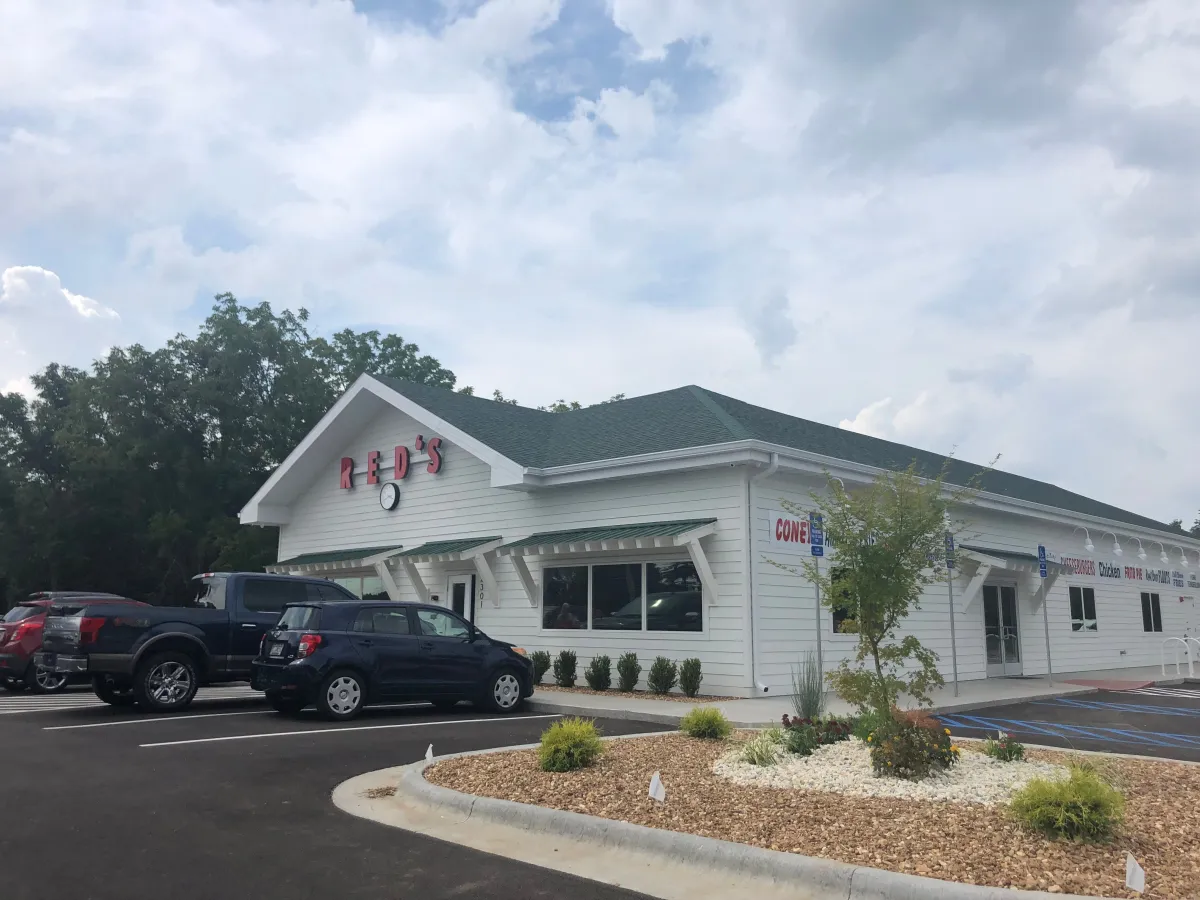 Photo: Red's Giant Hamburg, via www.theodysseyonline.com
 Photo: Springfield, Missouri, via i.pinimg.com
What happened next surprised everyone. Customers loved the convenience so much that they kept using the outdoor window even after the repairs were complete. People would drive up, complete their banking, and leave — all without stepping out of their cars.
Red Chaney, Sheldon's brother who ran the adjacent hamburger stand, watched this daily parade of car-bound customers with growing fascination. If people would drive up to a bank window, he wondered, why wouldn't they do the same for food?
That simple question launched an accidental revolution that now accounts for nearly 70% of all fast food sales in America — a $200 billion industry born from a broken window and one man's curiosity about human laziness.
The Experiment That Started a Movement
Red Chaney's first drive-thru attempt was laughably primitive by today's standards. In the summer of 1947, he cut a hole in the side wall of his hamburger stand and installed a simple wooden shelf. No intercom system, no menu board, no sophisticated ordering technology — just a window where customers could yell their orders and receive food without leaving their cars.
The response was immediate and overwhelming. Within weeks, cars were lined up down the street, filled with customers who preferred the convenience of staying in their vehicles over the traditional walk-up service. Chaney had accidentally tapped into something deeper than mere laziness — he'd discovered that Americans were developing an entirely new relationship with their automobiles.
Post-war America was experiencing unprecedented prosperity and mobility. Car ownership had exploded from 26 million vehicles in 1945 to over 40 million by 1950. Americans weren't just buying cars for transportation — they were using them as mobile living rooms, private spaces where they could eat, socialize, and conduct business.
Chaney's drive-thru offered something that traditional restaurants couldn't: the ability to maintain that automotive privacy while satisfying hunger. You could grab dinner without changing clothes, bring screaming children without disturbing other diners, or eat lunch during a brief work break without the time investment of traditional table service.
How One Idea Spread Across a Nation
Word of Chaney's success spread through the tight-knit community of small restaurant owners, but the drive-thru concept might have remained a regional curiosity if not for a traveling salesman named Harry Snyder. In 1948, Snyder visited Springfield on business, experienced Red's drive-thru service, and immediately recognized its potential.
Returning to California, Snyder opened the first In-N-Out Burger in Baldwin Park, featuring what he called a "two-way speaker box" — essentially an intercom system that allowed customers to place orders without shouting. This technological improvement solved the drive-thru's biggest operational problem and made the concept scalable for larger restaurants.
 Photo: Baldwin Park, via www.baldwinpark.com
The timing was perfect. California was leading the nation in car culture and suburban development, creating ideal conditions for drive-thru expansion. Unlike the dense Eastern cities where most Americans still lived, California's sprawling suburbs were designed around automobile access. Wide streets, ample parking, and car-dependent lifestyles made drive-thru dining seem natural rather than novel.
By 1950, drive-thru restaurants were appearing throughout the Southwest and West Coast. Each operator added their own innovations: menu boards, improved intercom systems, faster food preparation methods, and more efficient car-flow designs. What started as Red Chaney's broken window solution was evolving into a sophisticated system optimized for speed and convenience.
The McDonald's Revolution
The drive-thru concept reached its full potential when Ray Kroc's McDonald's corporation embraced it in the 1960s. Kroc recognized that drive-thru service wasn't just another ordering option — it was a fundamentally different business model that could serve more customers with fewer employees and less indoor seating space.
McDonald's engineers approached drive-thru design with scientific precision, studying traffic flow patterns, optimizing menu board placement, and timing every aspect of the ordering process. They discovered that the average drive-thru customer would wait no more than 90 seconds before leaving, so every element had to be designed for maximum speed.
The results were revolutionary. By 1975, McDonald's drive-thru locations were generating 40% more revenue than traditional walk-in restaurants, despite serving essentially the same food. The drive-thru had evolved from a convenient alternative into the primary way Americans interacted with fast food.
This success triggered an industry-wide transformation. Burger King, Wendy's, Taco Bell, and dozens of other chains redesigned their restaurants around drive-thru service. Traditional sit-down restaurants began adding drive-thru windows for takeout orders. Even non-food businesses adopted the model — drive-thru pharmacies, banks, and coffee shops became standard features of American suburbia.
The Cultural Transformation Nobody Planned
By the 1980s, the drive-thru had accomplished something remarkable: it had normalized eating in cars. What previous generations might have considered undignified or antisocial became a routine part of American life. Families regularly ate dinner during soccer practice commutes. Business people conducted lunch meetings while driving between appointments. Teenagers made drive-thru runs into social activities.
This transformation reflected broader changes in American society. As work schedules became more demanding and family activities more complex, the drive-thru offered a solution to time pressures that traditional dining couldn't match. You could feed your family without stopping your daily momentum — a perfect fit for an increasingly fast-paced culture.
The drive-thru also democratized fast food access. Parents with sleeping children, people with mobility challenges, and workers in dirty uniforms could all obtain restaurant meals without the social complications of indoor dining. The car became a great equalizer, allowing anyone to access restaurant service regardless of their appearance or circumstances.
The Accidental Empire
Today, drive-thru sales exceed $200 billion annually in the United States alone. The average American visits a drive-thru over 30 times per year, and during the COVID-19 pandemic, drive-thru service became essential infrastructure that kept the restaurant industry functioning.
Red Chaney couldn't have predicted that his broken bank window would inspire a dining revolution that now employs millions of Americans and shapes how entire cities are designed. Modern suburban development assumes drive-thru access, with zoning laws and traffic patterns built around the assumption that people will conduct business from their cars.
The next time you pull up to a drive-thru window, remember that you're participating in an accidental innovation born from one man's practical response to a broken window. Sometimes the most transformative ideas emerge not from grand planning, but from simple solutions to everyday problems — solutions that reveal hidden desires we didn't even know we had.