Rome's Most Beloved Ingredient Was Basically Liquid Rot — And You're Still Eating It
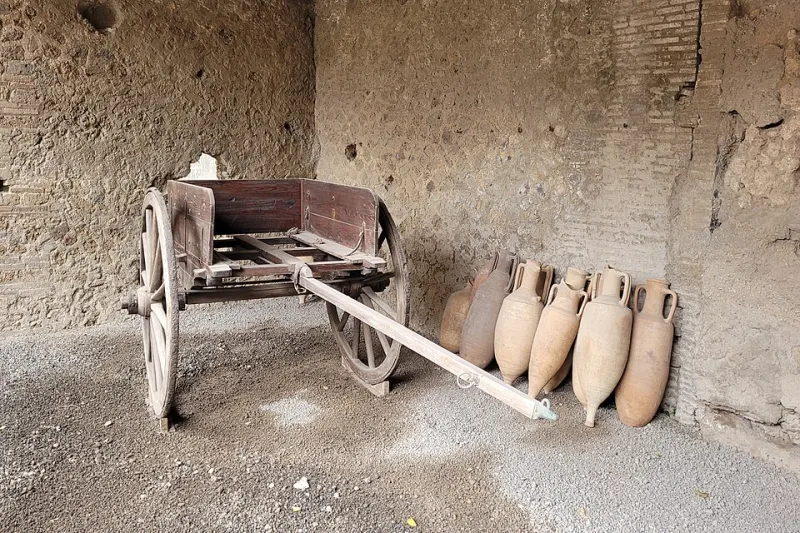
Photo: Bernard Gagnon, CC BY 4.0, via Wikimedia Commons
Rome's Most Beloved Ingredient Was Basically Liquid Rot — And You're Still Eating It
If you opened a Roman pantry two thousand years ago, the most important thing inside wouldn't be olive oil, wine, or even bread. It would be a clay jar of garum — a dark, intensely pungent liquid made from fermented fish guts — and it would be on virtually everything the Romans ate. Eggs. Meat. Vegetables. Bread. Even mixed into drinks.
If that sounds like the kind of thing a food dare is made of, consider this: you almost certainly have a version of it in your own kitchen right now. It just goes by a different name, and nobody mentions the fish.
What Garum Actually Was
Garum was produced by layering fish — often anchovies, mackerel, or tuna — with salt in large clay vessels, then leaving the whole thing to ferment in the sun for weeks or months. The result was a clear, amber-to-brown liquid that smelled aggressively of the sea, carried an almost overwhelming depth of savory flavor, and lasted for years without refrigeration.
Romans used it the way Americans use salt and hot sauce combined: as a background flavor booster that made everything taste more like itself, only better. The Latin culinary text Apicius, which is essentially ancient Rome's most famous cookbook, mentions garum in the majority of its recipes. It wasn't a specialty ingredient or a regional quirk. It was the backbone of Roman cooking across the entire Mediterranean world.
Production facilities — basically ancient fish sauce factories — have been found as far apart as Spain, Portugal, and North Africa. One of the best-preserved examples sits near Pompeii, frozen in time by the same volcanic eruption that buried the city in 79 AD. The vats are still there. The smell, mercifully, is not.
The Science Behind the Funk
Here's the thing about fermented fish sauce that took food scientists a long time to fully explain: it works. Not just culturally or historically, but chemically.
The fermentation process breaks down proteins in the fish into free amino acids, and the most important of those is glutamate — the same compound that gives Parmesan cheese, ripe tomatoes, and mushrooms their savory depth. In the 20th century, Japanese chemist Kikunae Ikeda would isolate and name this flavor: umami. But Romans had been exploiting it industrially for centuries before anyone had a word for it.
Garum wasn't just a condiment. It was a delivery system for one of the most powerful flavor compounds in the human diet, and the Romans had figured out how to mass-produce it at a scale that wouldn't be matched again for nearly two thousand years.
When Rome Fell, the Sauce Went Underground
The collapse of the Roman trade network in the fifth century AD didn't eliminate the taste for fermented fish. It just scattered it. In Southeast Asia, where fish sauce had developed independently along similar lines, the tradition never broke — Vietnamese nước chắm, Thai nam pla, and Filipino patis are all direct descendants of the same ancient logic: fish plus salt plus time equals something extraordinary.
In Europe, the story got more complicated. Medieval European cooking moved away from the intensely savory Roman palate, and fermented fish products fell out of fashion among the upper classes, who increasingly associated strong smells with poverty and poor taste. But the appetite for that umami depth never fully disappeared. It just went looking for new containers.
Worcestershire Sauce and the Art of the Disguise
In 1837, two chemists in Worcester, England — John Wheeley Lea and William Henry Perrins — created a sauce based on a recipe supposedly brought back from India by a British nobleman. The formula included tamarind, vinegar, molasses, cloves, and a significant quantity of fermented anchovies.
They bottled it, labeled it with a name that most Americans still can't confidently pronounce, and sold it as something exotic and British. It became one of the most successful condiments in history. Lea & Perrins Worcestershire sauce is still on American grocery shelves today, in the same basic formula. The anchovies are still in there. They're listed on the label, but in small print, and most people have never noticed.
Worcestershire was garum in a Victorian suit. Same mechanism, same umami punch, same fermented fish foundation — just presented in a way that didn't require anyone to think about what it actually was.
Soy Sauce Pulled Off the Same Trick
Around the same time Worcestershire was conquering British tables, soy sauce was making its way into American kitchens through Chinese and Japanese immigration and, later, through the explosion of Asian-American restaurants in the 20th century. Soy sauce is fermented — not from fish, but from soybeans and wheat — and it delivers the same fundamental umami payload through a completely different biological process.
For American consumers who might have recoiled at the idea of fermented fish liquid, soy sauce was an easier sell. It smelled sharp and clean rather than oceanic. It was dark and dramatic-looking. And it had no obvious connection to the Roman fish vats or the Southeast Asian fish sauce that still makes some Western diners nervous.
But the flavor logic is identical. You're still reaching for a fermented, glutamate-rich liquid to make your food taste more deeply like itself. You're still doing exactly what a Roman cook in Pompeii was doing in 50 AD.
The Rebranding Never Really Stopped
Walk into any well-stocked American grocery store today and you'll find multiple descendants of garum sitting on the same shelf, often without any obvious family resemblance. Fish sauce — now embraced by American home cooks who discovered it through Vietnamese and Thai cuisine — sits next to Worcestershire, soy sauce, and a growing number of premium umami-boosting products made from fermented anchovies and marketed to food-forward consumers who want depth without knowing why.
Colatura di alici, a traditional Italian fish sauce from the Amalfi Coast that is essentially direct-line garum, has started appearing in specialty food stores in major American cities. It's sold at a premium, described in hushed, reverential tones in food magazines, and treated as a discovery. It is, in fact, two thousand years old.
 Photo: Amalfi Coast, via traveldigg.com
The Romans would find all of this very familiar. They'd probably also wonder why it took so long to come back.