The Box That Came Between Americans and Their Stoves
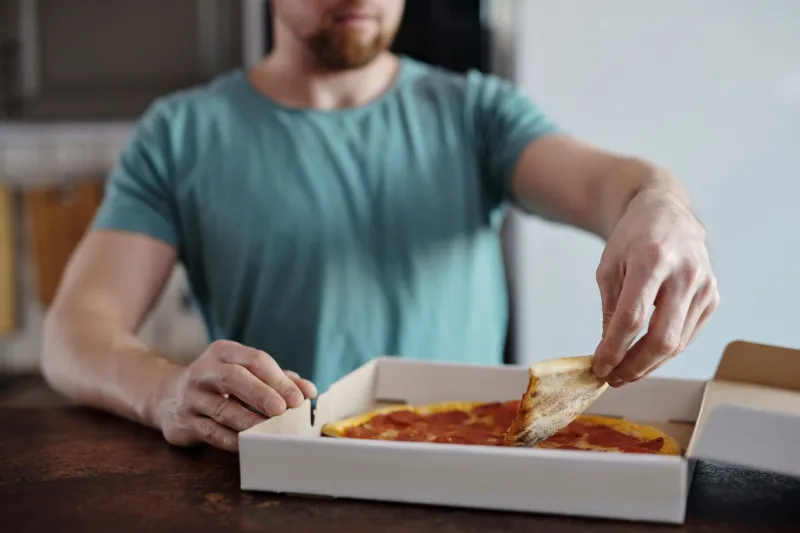
Somewhere in America right now, someone is standing in front of an open kitchen cabinet, staring at a row of cardboard boxes, and calling it meal planning. There's nothing unusual about that. It feels completely normal — because for most living Americans, it always has been. But step back about a hundred years, and the idea that dinner could live inside a printed cardboard rectangle would have sounded like science fiction.
The cardboard box didn't just change how food got packaged. It quietly changed what Americans understood a meal to be, who was supposed to make it, and how much effort that was supposed to require.
Before the Box, There Was Just the Kitchen
For most of American history, cooking was a daily act of construction. You started with raw ingredients — flour, fat, dried beans, whatever was in the root cellar — and you built something from nothing. The labor was invisible because it was assumed, and it was assumed because it almost always fell to women. There were no shortcuts because there was no infrastructure to support them. Every meal had a before and an after, and the before was long.
That began to shift in the late 1800s, when industrialization started moving food production out of the home and into the factory. Canned goods were the first real disruption. But cans were cold, heavy, and a little alarming — people didn't entirely trust them. The cardboard box was different. It was light, printable, and it could talk to you. It had a friendly face, a recipe suggestion, and a reassuring promise printed right on the front.
The Cereal Box Changes Everything
The story really picks up in Battle Creek, Michigan, in the 1890s. C.W. Post and the Kellogg brothers were competing to sell grain-based breakfast products to a health-conscious market, and they needed packaging that felt clean, modern, and trustworthy. The wax-lined cardboard cereal box was the answer.
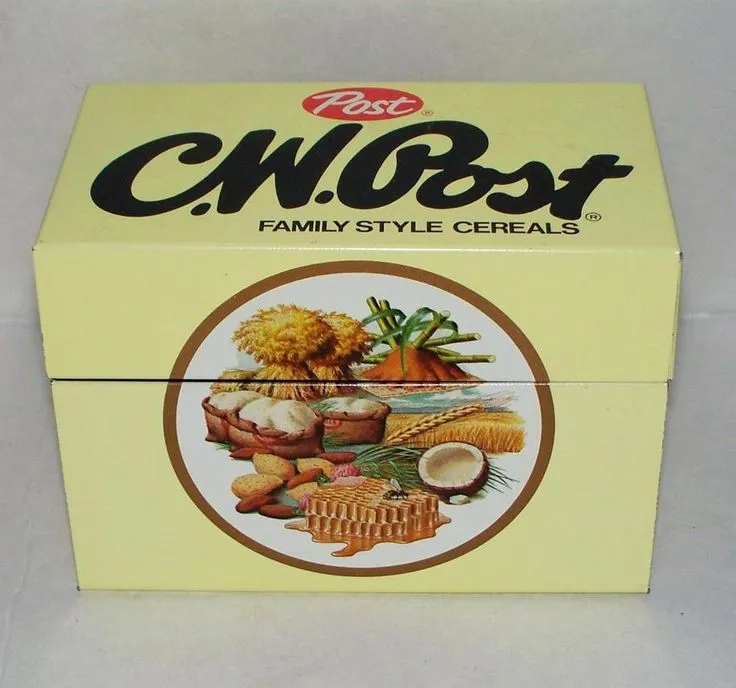 Photo: C.W. Post, via i.pinimg.com
 Photo: Battle Creek, Michigan, via i.pinimg.com
What made it revolutionary wasn't just the container — it was what the container communicated. A cereal box said: this food has already been prepared by experts. Your job is simply to pour it. For the first time, a packaged product didn't just replace a step in cooking. It replaced the entire act and framed that replacement as progress.
By the 1920s, the cereal box had become so culturally embedded that it started shaping what Americans thought breakfast was supposed to look like. Not eggs you scrambled. Not oatmeal you stirred. A bowl, some milk, and a box you read while you ate. The box wasn't just packaging. It was a meal plan.
The TV Dinner and the Architecture of Convenience
If the cereal box rewired breakfast, the frozen TV dinner — introduced by Swanson in 1953 — did the same for the evening meal. And it did it with a very specific visual tool: the divided aluminum tray.
Swanson's original turkey dinner came portioned into three neat sections: the protein, the starch, the vegetable. You didn't have to think about balance or proportion. The tray had already decided. You just had to heat it and eat it. Within two years, Swanson was selling ten million of them annually.
But the tray came in a box. And the box, with its full-color illustration of the finished meal, was doing something powerful. It was showing Americans what dinner was supposed to look like — without any of the mess, the timing, or the accumulated skill that real cooking required. The image on the outside of the box became the standard. If your homemade meal looked like that, you'd done it right.
Takeout Containers and the Permission to Stop Entirely
The next major shift came with the rise of takeout culture in the 1960s and '70s, accelerated by the explosion of Chinese-American restaurants and later pizza delivery. The white paper takeout container — that iconic folded box Americans associate with lo mein and fried rice — became a symbol of a meal that required nothing of you at all.
By this point, the cardboard box had evolved from a convenience into a permission slip. It told Americans that feeding yourself from a box wasn't a failure of domesticity — it was a lifestyle choice. Advertising reinforced this constantly. Brands didn't sell you food. They sold you time back, freedom from the kitchen, a reward for a busy day.
The language shifted, too. You weren't skipping cooking. You were making a smart choice. The box had given that choice a respectable vocabulary.
Who Stopped Cooking — and Who Didn't
It's worth pausing on something the marketing never really addressed: the convenience revolution wasn't equally distributed. Boxed and frozen food was heavily marketed to middle-class suburban households, and specifically to women who were increasingly entering the workforce in the postwar decades. The promise of the box was liberation from the kitchen — but that promise landed differently depending on who you were and what you could afford.
For families who couldn't buy the premium frozen dinners or the name-brand cereal, scratch cooking didn't disappear. It just became invisible again, quietly continuing in kitchens that the food industry wasn't particularly interested in photographing for advertisements.
Meanwhile, the families who did make the switch to boxed meals were slowly losing something harder to quantify: the transmitted knowledge of how to cook. When a generation grows up watching adults open boxes instead of building meals, the skills don't get passed down. They just quietly disappear.
The Box Is Still Winning
Today, the cardboard food box has never been more dominant. Meal kit delivery services put the ingredients in a box with a card telling you exactly what to do — cooking, but with the thinking already removed. Grocery store shelves are built around boxed products. And the mental image most Americans carry of a 'complete meal' — protein, starch, vegetable, arranged in neat portions — was largely designed by the packaging industry, not by nutritionists or grandmothers.
The box convinced America that convenience and quality were the same thing. That opening something was the same as making something. That dinner didn't need a before — it just needed a microwave and two minutes.
None of that happened by accident. It happened one printed cardboard rectangle at a time.