Why Your Dinner Plate Could Feed a Family of Four in 1950
When Normal Became Enormous
Walk into any American restaurant today, and you'll be served enough food to feed a small village. A single pasta dish contains three cups of noodles. A burger requires two hands and an engineering degree to eat properly. A soft drink comes in a container large enough to water a houseplant for a week.
But this wasn't always normal. In 1950, a restaurant hamburger weighed about 1.5 ounces. Today's "regular" burger is often 4 ounces or larger. A movie theater popcorn that once held two cups now holds sixteen. A bagel that was three inches across in 1980 is now six inches of doughy real estate.
Americans didn't suddenly develop massive appetites. The food industry developed a massive surplus problem — and solved it by making your dinner plate the dumping ground.
The Surplus That Changed Everything
After World War II, American agriculture faced an unexpected challenge: too much success. Government subsidies designed to boost wartime food production had worked almost too well. Farmers were producing enormous quantities of corn, soybeans, and wheat, but the wartime demand was gone.
The solution came from an unlikely source: the processed food industry. Companies realized they could buy these surplus commodities dirt cheap and turn them into high-margin products. Corn became high-fructose corn syrup. Soybeans became cheap cooking oil. Wheat became refined flour for bigger buns, larger pizza crusts, and supersized sandwich bread.
But there was a problem: Americans weren't eating enough to absorb all this cheap food. The industry needed to find ways to move more product without raising prices. Their answer was deceptively simple — make everything bigger.
The Psychology of More for Less
The genius of portion inflation wasn't just economic — it was psychological. Restaurants discovered that customers felt like they were getting tremendous value when plates arrived overflowing with food, even if they couldn't finish it all. A massive portion justified a higher price in ways that better ingredients or service never could.
Fast food chains led the charge. In 1955, a McDonald's meal consisted of a small hamburger, small fries, and a 7-ounce Coca-Cola — about 590 calories total. By 2000, the "medium" meal at McDonald's contained more calories than that entire 1955 meal, and customers could upgrade to "large" or "super-size" for just a few cents more.
The economics were irresistible. The actual cost of food represents only about 30% of a restaurant's expenses. Labor, rent, and utilities cost the same whether you serve a 4-ounce portion or an 8-ounce portion. But customers perceived the larger portion as dramatically better value, allowing restaurants to charge significantly more while spending only marginally more on ingredients.
When Bigger Became Standard
By the 1980s, portion inflation had created a new normal. Restaurants that served traditional-sized portions began to look stingy compared to competitors offering massive plates. Customers started expecting enormous servings, and businesses that didn't deliver lost market share.
The trend accelerated through the 1990s and 2000s. Chain restaurants competed on portion size like an arms race. Cheesecake Factory built its reputation on comically oversized desserts. Olive Garden made unlimited breadsticks a selling point. Outback Steakhouse served "bloomin' onions" that contained more calories than most people should eat in an entire day.
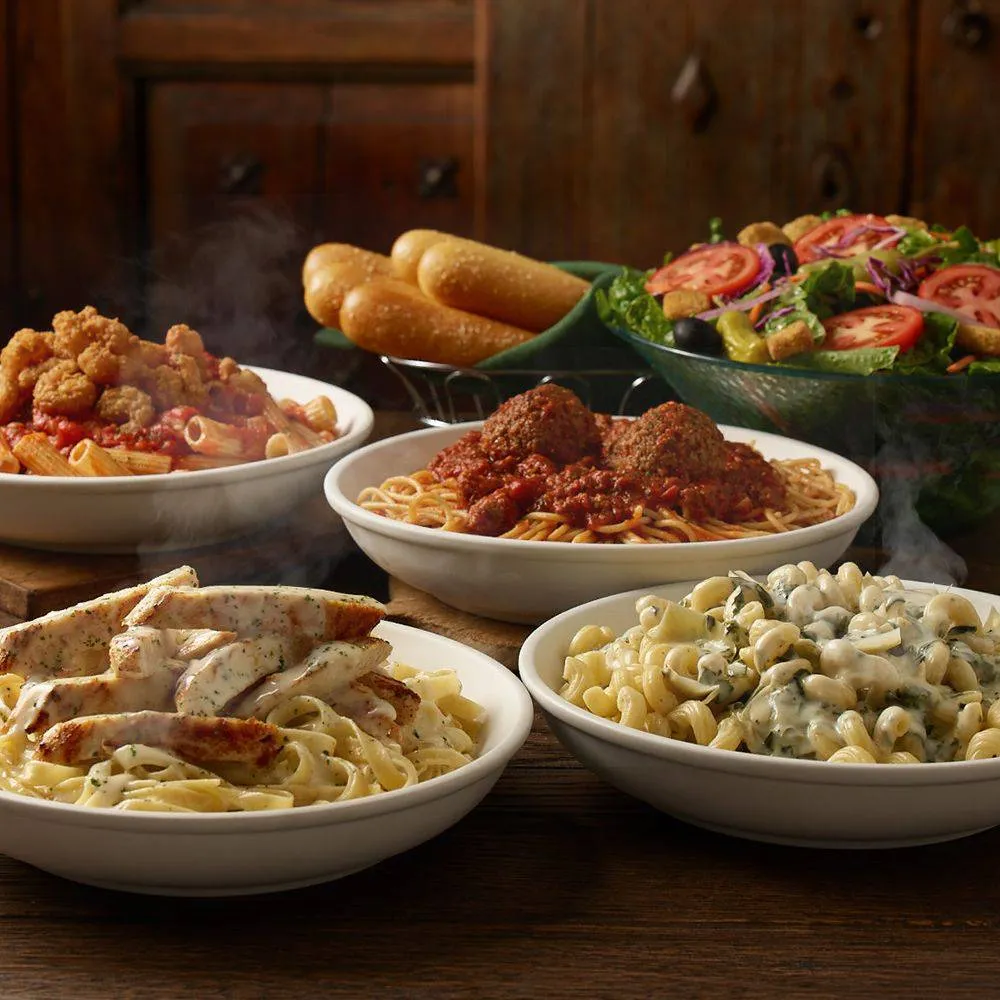 Photo: Olive Garden, via pigeonforgetickets.com
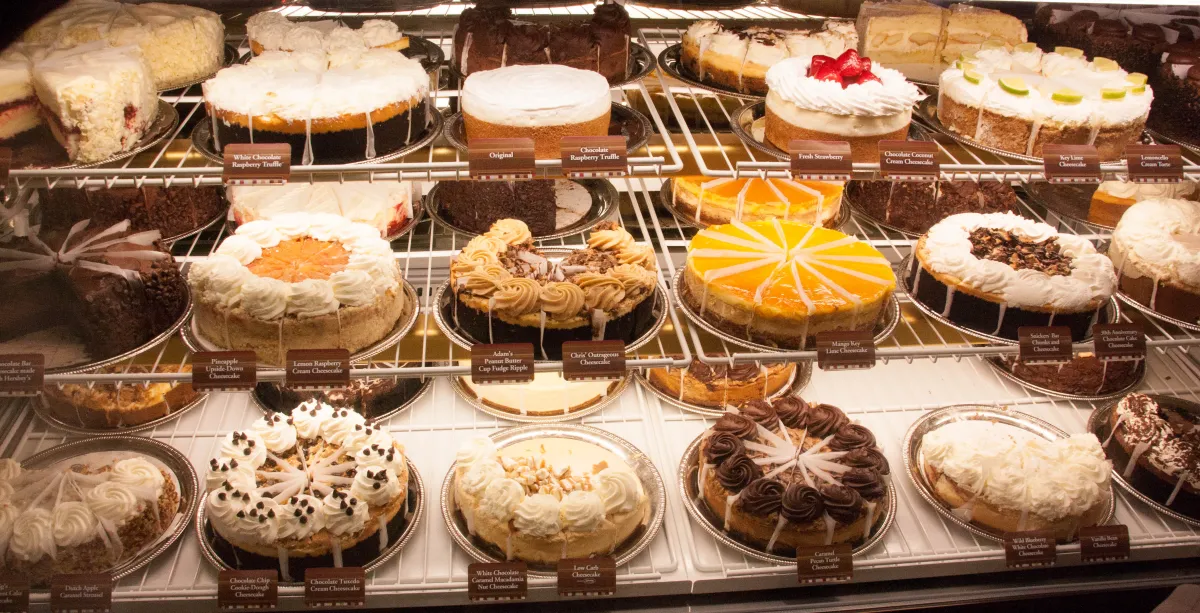 Photo: Cheesecake Factory, via www.autostraddle.com
Even fine dining wasn't immune. Upscale restaurants began serving multiple courses with larger portions, turning dinner into a marathon eating session that could last three hours and contain 3,000 calories.
The Commodity Connection
Behind every oversized portion lies the same economic foundation: cheap commodity ingredients. That massive muffin is mostly subsidized corn syrup and soybean oil. The giant soft drink is high-fructose corn syrup and water. The enormous pasta bowl is filled with wheat that cost pennies per pound.
Restaurants learned to build portions around the cheapest ingredients. A little bit of expensive protein (chicken, beef, fish) gets buried under mountains of cheap starches and fats. Your plate looks full and abundant, but most of what you're paying for costs almost nothing to produce.
This is why a restaurant salad often costs more than a massive plate of pasta, even though lettuce and vegetables require more labor to prepare. The pasta is mostly subsidized wheat and oil. The salad contains ingredients that actually cost money.
The Cultural Rewiring
Somewhere in this process, Americans forgot what a normal portion looked like. A generation grew up thinking that dinner meant eating until you were uncomfortably full, that a single meal should contain most of your daily calories, that leaving food on your plate was wasteful rather than sensible.
The change was so gradual that most people didn't notice it happening. Portion sizes crept up year by year, and each increase became the new baseline for "normal." By the time anyone thought to measure the change, American portions had become the largest in the world — roughly double the size of portions in most other developed countries.
The Real Cost of Cheap Commodities
Today's enormous portions aren't a sign of American generosity or abundance — they're the inevitable result of agricultural policy decisions made seventy years ago. The government created massive commodity surpluses, the food industry found profitable ways to process them, and restaurants discovered that customers would pay premium prices for enormous plates of cheap ingredients.
Your oversized dinner isn't about getting good value. It's about moving surplus corn, soybeans, and wheat from government-subsidized farms to your table, with several profitable stops along the way.
The next time a server sets down a plate that could feed a small army, remember: you're not getting a great deal. You're participating in the final stage of a commodity disposal system that's been running for decades. The only question is whether you're going to eat it all — or finally recognize that "normal" portions used to be about half that size.