A Chemistry Experiment Gone Wrong Created America's Trillion-Dollar Fizz Addiction
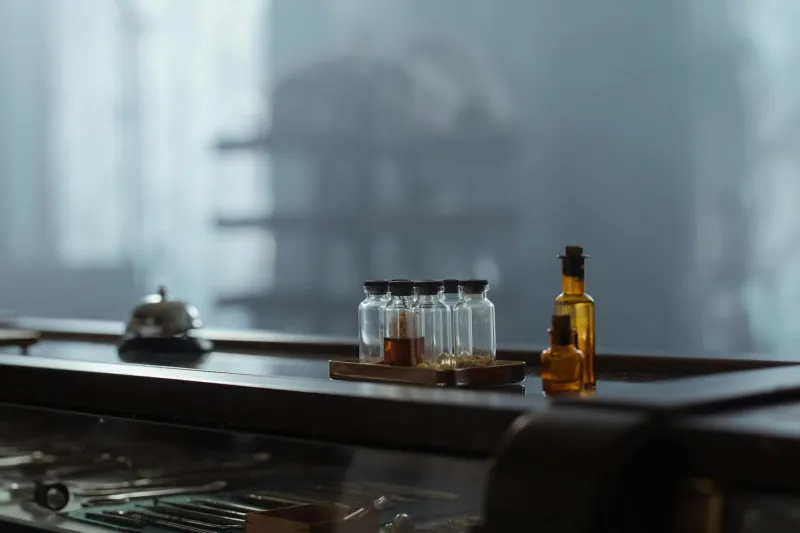
The Accidental Discovery That Launched a Thousand Brands
Every time you crack open a Coke, Pepsi, or any fizzy drink, you're consuming the byproduct of an 18th-century chemistry experiment that went sideways in the most profitable way imaginable. Joseph Priestley, a British scientist working in Leeds, England, wasn't trying to invent soda when he figured out how to infuse water with carbon dioxide in 1767. He was investigating the fundamental nature of air itself — a noble scientific pursuit that accidentally created America's most persistent beverage obsession.
Priestley's discovery launched an industry worth hundreds of billions of dollars today, but it started with a basic misunderstanding that nobody bothered to correct for nearly two centuries: the idea that fizzy water was medicine.
When Air Became a Scientific Mystery
In Priestley's time, scientists were just beginning to understand that air wasn't a single substance but a mixture of different gases. This was revolutionary thinking — most people assumed air was air, period. Priestley, who would later discover oxygen, was obsessed with figuring out what made different types of air behave differently.
He lived next door to a brewery in Leeds, which turned out to be perfect for his research. Breweries produce carbon dioxide as a natural byproduct of fermentation, and Priestley noticed that the air hanging over the fermenting beer had unusual properties. It was heavier than normal air, and it extinguished flames instantly.
Being a methodical scientist, Priestley started experimenting with this strange brewery air. He collected it, tested it, and eventually figured out how to dissolve it into water by suspending a bowl of water over fermenting beer and letting the gas naturally infuse the liquid.
The Medicine That Wasn't
When Priestley tasted his fizzy water creation, he didn't think "this would be great with cola flavoring and high fructose corn syrup." He thought he'd discovered a cure for scurvy.
This wasn't entirely crazy. Scurvy was killing sailors by the thousands, and doctors were desperately searching for treatments. Priestley knew that some natural spring waters had bubbles and seemed to have healing properties, so he assumed his artificially carbonated water would work the same way. He published a paper called "Directions for Impregnating Water with Fixed Air" and promoted his discovery as a medical breakthrough.
The Royal Navy was so convinced by Priestley's theory that they considered adding carbonation equipment to ships. The idea was that sailors could make their own medicinal fizzy water during long voyages and avoid scurvy entirely. It didn't work — scurvy is caused by vitamin C deficiency, not a lack of bubbles — but the endorsement gave carbonated water instant credibility as a health product.
From Apothecary to Soda Fountain
Priestley's medicinal fizzy water crossed the Atlantic and landed in American apothecaries, where pharmacists sold it as a cure for everything from indigestion to depression. This is where the story gets interesting from a business perspective: selling medicine was more profitable than selling regular water, so entrepreneurs had strong incentives to keep promoting the health benefits of carbonation.
By the early 1800s, American pharmacists were installing carbonation equipment in their shops and experimenting with different flavors to make the medicine go down easier. They added fruit syrups, herbs, and eventually caffeine-containing extracts like kola nut. The soda fountain was born not as a treat dispensary, but as a medical device.
Customers came to soda fountains the way they'd visit a doctor today. They ordered specific combinations of flavored syrups and carbonated water to treat their ailments. Pharmacists developed signature recipes and built loyal followings among customers who swore their particular mixture cured headaches, stomach problems, or general fatigue.
The Accidental Soft Drink Empire
The transition from medicine to refreshment happened gradually and almost by accident. Customers kept coming back not because the fizzy drinks cured anything, but because they tasted good and provided a mild caffeine boost. Pharmacists noticed that people were ordering their "medicine" even when they weren't sick.
Smart business owners began marketing their carbonated concoctions as both medicine and pleasure. Coca-Cola, invented by pharmacist John Pemberton in 1886, was advertised as a brain tonic and cure for headaches, but also as a delicious refreshment. Dr Pepper, created by pharmacist Charles Alderton in 1885, promised to restore vim, vigor, and vitality while tasting like a blend of 23 flavors.
The medical claims were mostly nonsense, but they provided cover for what was really happening: Americans were developing a taste for sweet, caffeinated, carbonated beverages that made them feel good in ways that had nothing to do with treating disease.
When Medicine Became Big Business
By the 1920s, the pretense of medicine was largely abandoned, but the infrastructure built on Priestley's medicinal misunderstanding had created an entire industry. Coca-Cola, Pepsi-Cola, and dozens of other brands were mass-producing carbonated soft drinks and distributing them nationwide.
The irony is perfect: a scientist trying to understand the basic properties of air accidentally created a product that became one of America's most defining consumer experiences. Priestley's laboratory curiosity about brewery gases evolved into an industry that now sells over 38 billion gallons of carbonated soft drinks annually in the United States alone.
The Fizz That Built America's Drinking Habits
Today, the average American consumes about 44 gallons of soft drinks per year, making carbonated beverages more popular than coffee, tea, or milk. None of this would exist without Priestley's accidental discovery in that Leeds brewery.
The medicinal origin story explains a lot about how Americans think about soft drinks. We still associate carbonation with feeling better — settling an upset stomach, providing an energy boost, or just lifting our mood. These aren't medical effects in any scientific sense, but they're real psychological benefits that trace back to centuries of marketing fizzy water as health treatment.
Priestley died in 1804, long before Coca-Cola or Pepsi existed, but his chemistry experiment gone wrong created the foundation for one of America's most persistent cultural habits. Every time you hear the hiss of a can opening or feel that first carbonated bite, you're experiencing the echo of an 18th-century scientist who thought he was making medicine and accidentally launched a revolution in how Americans drink.
The next time someone tells you soda is bad for you, remind them that it started as medicine. Priestley would probably be amazed that his laboratory accident became America's favorite way to consume sugar, caffeine, and artificial flavors — but he'd definitely recognize the bubbles.