A Midnight Mistake at a Buffalo Bar Created America's Favorite Sports Food
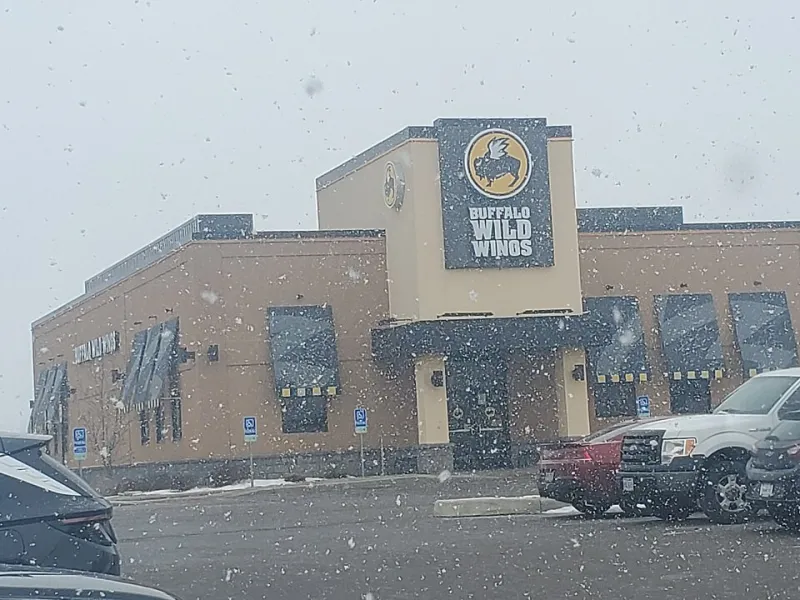
Photo: JBTHEMILKER, CC BY-SA 4.0, via Wikimedia Commons
A Midnight Mistake at a Buffalo Bar Created America's Favorite Sports Food
Every Super Bowl Sunday, Americans eat somewhere in the neighborhood of 1.4 billion chicken wings. They order them at sports bars, fight over the last ones in the basket, debate the correct ratio of blue cheese to ranch, and argue about whether boneless wings are even real wings. The chicken wing has become so thoroughly embedded in American sports culture that it's almost impossible to imagine the game without them.
 Photo: Super Bowl, via www.sportsbettingdime.com
Which makes it all the more remarkable that, sixty years ago, the chicken wing was garbage.
The Part of the Chicken Nobody Wanted
For most of American culinary history, chicken wings were the afterthought of the afterthought. When a whole chicken was broken down, the breast got the attention, the thighs went into the pot, the drumsticks were handheld and convenient. The wings? Mostly they went into stock. They were bony, awkward, and didn't offer much meat relative to the effort required to eat them.
Restaurants in the mid-20th century had little use for wings as a standalone item. Butchers sold them cheap. Home cooks threw them in soups. The commercial food industry treated them as a byproduct rather than a product. In 1964, nobody was building a menu around chicken wings.
That was about to change, in the most chaotic and unplanned way possible.
Friday Night, Too Much Chicken, No Real Plan
The Anchor Bar on Main Street in Buffalo, New York was run by Dominic and Teressa Bellissimo — a working-class Italian-American couple who had built a neighborhood institution over the years. The bar was a local fixture, the kind of place where regulars knew each other and the kitchen was always doing something.
 Photo: Anchor Bar, via live.staticflickr.com
The exact details of what happened that Friday night in 1964 have been told a few different ways over the years, which is fitting for a story that was never meant to become history. The most widely repeated version goes like this: a delivery of chicken wings arrived at the Anchor Bar by mistake — or in larger quantity than expected — leaving the kitchen with a surplus of a part nobody quite knew what to do with. Around the same time, Teressa's son Dominic Jr. showed up late in the evening with a group of hungry friends.
Teressa needed to feed them something fast, with what she had on hand.
She took the wings, deep-fried them — a method that worked well for the fat content and small size of the cut — and tossed them in a sauce she made from cayenne-based hot sauce and melted butter. She served them with celery sticks and blue cheese dressing, both of which happened to be available in the kitchen. The celery was practical. The blue cheese was a guess. The whole thing was improvised in real time.
The young men ate every last one.
Word Travels Fast When the Food Is Good
What happened next followed the oldest pattern in food history: people talked. The friends came back. They brought other friends. The Anchor Bar started offering the wings as a regular item, and word spread through Buffalo the way good food always does — person to person, with a kind of evangelical enthusiasm that no marketing budget can replicate.
Buffalo is a working-class city with a strong identity and a fierce loyalty to its own. When Buffalo claimed something as its own, it stayed claimed. The wings became a local institution before they became anything else, and that local pride created the foundation for everything that followed.
By the 1970s, food writers and journalists had discovered the Anchor Bar. The wings started appearing in national publications. Visitors to Buffalo made pilgrimages. The story of Teressa's late-night improvisation became the kind of origin myth that cities build around their best ideas.
The Leap to National Obsession
The chicken wing's transformation from regional bar food to national phenomenon happened in layers. Chain restaurants started putting wings on their menus in the 1980s. Hooters opened in 1983 and made wings central to its identity from day one. Buffalo Wild Wings — now one of the largest restaurant chains in America — was founded in 1982 and built its entire brand around the concept.
The Super Bowl connection grew organically. Football games mean bars. Bars mean drinking. Drinking means people need something to eat that's easy to share, doesn't require utensils, and tastes good with beer. Chicken wings hit every single one of those criteria. By the 1990s, Super Bowl Sunday had become the single largest chicken wing consumption event in the American calendar — a distinction it still holds by a wide margin.
The National Chicken Council, which tracks these things with more precision than you might expect, estimates that over 1.4 billion wings are consumed during Super Bowl weekend. That's enough wings, laid end to end, to circle the Earth more than twice. From a Friday night surplus at a Buffalo bar to a number that requires scientific notation to express comfortably — that's a genuinely remarkable arc.
What Teressa Bellissimo Actually Invented
The easy version of this story is that Teressa Bellissimo invented a recipe. The more accurate version is that she invented a category. Before the Anchor Bar, there was no such thing as "bar wings" as a cultural concept. There was no sports bar wing platter. There was no debate about sauce heat levels or the correct dipping condiment.
She took a piece of the chicken that the food industry had decided was worthless and turned it into something people drove across the city for. Then across the state. Then across the country.
Teressa passed away in 1985, before the full scale of what she'd started became completely clear. The Anchor Bar is still open on Main Street in Buffalo. It still serves wings. It still gets visitors who make the trip specifically because of what happened in that kitchen on a Friday night in 1964, when a surplus became a solution and a solution became an American institution.
Some of the best things on the American table got there by accident. This one got there because someone was hungry, the kitchen had extra chicken, and one woman decided to figure it out.