Fortune Cookies Are an American Invention — The Restaurant Industry Just Forgot to Mention That
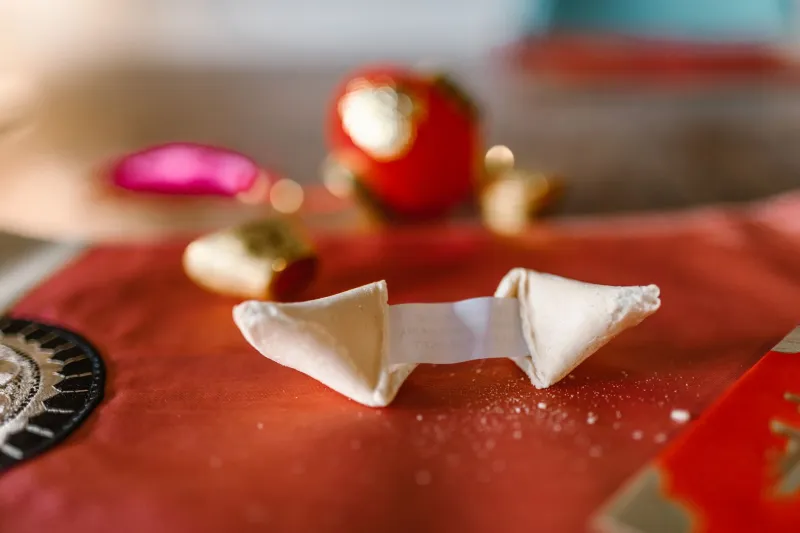
At the end of a Chinese takeout meal, the fortune cookie arrives like a punctuation mark. It's expected. It's part of the ritual. You crack it open, you read the slip of paper, you eat the cookie or you don't, and the meal is officially over. The fortune cookie feels ancient, exotic, and distinctly Chinese.
It is none of those things.
Fortune cookies were almost certainly invented in California in the early twentieth century, probably by a Japanese immigrant, and they remain largely unknown in China. The country whose cuisine the cookie supposedly represents has essentially no relationship with the object at all. What fortune cookies actually represent is something more interesting: the story of how an industry built a mythology, and how long that mythology held before anyone thought to check.
The California Origins Nobody Agreed On
The honest answer to "who invented the fortune cookie" is that we don't know for certain, and the competing claims are genuinely fascinating.
The most credible origin points to Makoto Hagiwara, a Japanese landscape designer who managed the Japanese Tea Garden in San Francisco's Golden Gate Park in the early 1900s. Hagiwara is credited by many food historians with serving a cookie folded around a slip of paper — a design borrowed from a Japanese temple tradition involving fortunes called omikuji — to visitors at the garden sometime around 1907 to 1914. The cookies were made for him by a local Chinese bakery, which may explain some of the later confusion about their origins.
The competing claim comes from David Jung, a Chinese immigrant who founded the Hong Kong Noodle Company in Los Angeles. Jung claimed he invented the fortune cookie around 1918 as a way to hand out inspirational messages to the city's poor. His version of the story has been promoted enthusiastically by Los Angeles boosters for decades.
In 1983, a mock trial was held in San Francisco to settle the dispute. San Francisco won. Los Angeles protested. The fortune cookie's birthplace remains, depending on who you ask, either a Japanese tea garden in San Francisco or a noodle factory in Los Angeles — and definitively not anywhere in China.
The War Changed Everything
For the first few decades of their existence, fortune cookies were a regional curiosity. They were served in some California Chinese restaurants and a handful of Japanese establishments, and they hadn't yet made the leap to national relevance.
World War II changed that, in a way that had nothing to do with the cookie itself. When Japanese Americans were forcibly relocated to internment camps starting in 1942, the Japanese-owned and operated businesses that had been producing fortune cookies — including some of the San Francisco bakeries connected to the cookie's origins — were shut down or transferred. Chinese-American entrepreneurs stepped in to fill the gap, took over production, and the cookie's Japanese roots faded from the public story.
At the same time, Chinese restaurants were expanding rapidly across the United States. The postwar economic boom was filling American cities with new restaurants and new dining habits, and Chinese food — affordable, flavorful, and adaptable — was finding audiences far beyond the Chinatowns where it had been confined for decades.
Restaurant owners needed ways to give the dining experience a sense of occasion, of authenticity, of something extra. The fortune cookie, with its element of surprise and its little personalized message, was perfect. It cost almost nothing to produce. It delighted customers. It gave the meal a satisfying ending that felt distinctive and culturally specific.
The fact that it wasn't actually Chinese was, at this point, beside the point.
How a Cookie Became a Cultural Fact
By the 1960s and 70s, the fortune cookie was essentially mandatory at American Chinese restaurants. Not eating at a Chinese restaurant and getting a fortune cookie at the end was like going to an Italian restaurant and not getting a bread basket — technically possible, but somehow wrong.
The cookie had done something remarkable: it had inserted itself so completely into the American experience of Chinese food that most people simply assumed it had always been there, that it came from somewhere authentic, that it was part of a real culinary tradition. Chinese-American restaurant owners, for their part, had little incentive to correct the record. The cookie was good for business. It made customers happy. It was an easy, inexpensive way to end a meal on a warm note.
The fortune cookie industry grew accordingly. By the late twentieth century, American companies were producing somewhere around three billion fortune cookies a year. The vast majority stayed in the United States. A small number were exported to China as a novelty — an American curiosity that the Chinese found amusing and slightly baffling.
The New York Times Moment
In 1983, a New York Times food writer named Patricia Wells published a piece that, among other things, noted the fortune cookie's American origins and its near-total absence from actual Chinese cuisine. The article caused a small international ripple. Chinese officials and food writers responded with some indignation — not because they wanted to claim the fortune cookie, but because the piece highlighted how thoroughly American assumptions about Chinese food had diverged from anything resembling Chinese reality.
The revelation didn't change much. Americans kept cracking open fortune cookies at the end of Chinese meals. The cookies kept arriving in little plastic sleeves with the check. The industry kept growing.
What the moment did do was put the question on the record: how does a food tradition become so fixed that nobody thinks to ask where it came from?
The Cookie That Stuck
Fortune cookies work. That's the simplest explanation for their persistence. They're a good idea — a small, sweet, interactive ending to a meal that gives everyone at the table something to do and something to talk about. The fortunes themselves have evolved from vaguely inspirational aphorisms to include lucky numbers, language lessons, and jokes. The format has been endlessly adapted for weddings, corporate events, and novelty gifts.
The cookie's cultural identity has also shifted as the broader conversation about American food and cultural appropriation has grown more sophisticated. Food historians, Chinese-American writers, and restaurant critics have spent the last few decades unpacking what American Chinese food actually is — a distinct cuisine that evolved in the United States, shaped by immigration, adaptation, and the specific demands of the American market — and the fortune cookie fits neatly into that story.
It's not a Chinese invention that America adopted. It's an American invention that America decided was Chinese, because the story felt right, and because nobody in the restaurant business had any reason to argue.
The fortune inside your next cookie might say something about honesty being the best policy. The cookie itself has been keeping a secret for about a hundred years.