Nobody Handed You a Shopping List. Someone Had to Invent the Habit First.
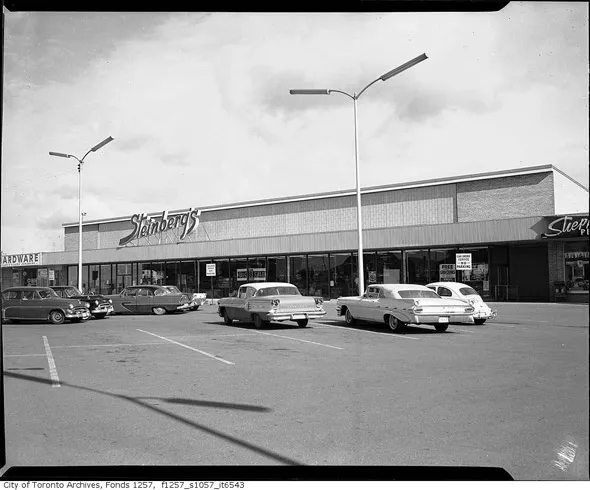
Photo: City of Toronto Archives f1257 s1057 it6543, CC0, via Wikimedia Commons
You probably have one on your phone right now. Maybe it's a crumpled piece of paper stuffed into a coat pocket. Maybe it's a shared app your partner keeps adding things to without telling you. The shopping list is so embedded in American domestic life that it feels ancient — like something people have always done, the way they've always slept or eaten.
They haven't. The shopping list is a relatively modern invention, and its rise says a lot about anxiety, literacy, and the strange birth of the American supermarket.
Before the List, There Was the Relationship
For most of American history, buying food wasn't a solo mission. It was a social transaction. You walked into a small neighborhood grocery store, told the man behind the counter what you needed, and he fetched it for you. There was no wandering the aisles, no comparing labels, no impulse buys near the checkout. The grocer knew your family. He knew what you usually bought. In many cases, he'd simply extend you credit and settle up at the end of the week.
In that system, a written list was almost beside the point. The grocer was the list. He was also, in a way, the memory of your household's eating habits.
But that system started cracking in the early twentieth century, and the crack came from an unlikely direction: the self-service grocery store.
The Store That Changed Everything
When Clarence Saunders opened the first Piggly Wiggly in Memphis, Tennessee in 1916, he did something radical. He made customers walk through the store and pick items off the shelves themselves. No counter. No clerk fetching things. Just you, a basket, and a maze of products.
It sounds obvious now. At the time, it was genuinely disorienting.
Suddenly, shoppers had to know what they wanted before they got to the store. The grocer was no longer there to prompt them. There was no one to say, "Didn't you usually get a pound of butter?" The burden of memory shifted entirely onto the customer — and that burden, it turned out, was heavier than anyone expected.
Food waste spiked. Families bought duplicates of things they already had. They forgot staples. They came home with bags full of things that didn't add up to a coherent meal. The self-service model was more efficient for retailers, but it created a small domestic crisis for households trying to manage a week's worth of eating.
The Pencil Shortage That Pushed People to Write Things Down
Here's where the story gets specific in a way that feels almost too neat to be true.
During World War I, materials shortages hit American households in unexpected ways. Pencils — cheap, abundant, taken for granted — became harder to come by as graphite and cedar supplies were redirected toward the war effort. Home economists and domestic science advocates, who were already pushing for more organized household management, seized on this moment. If you had a pencil, they argued, you should be using it deliberately. Planning your grocery trip in writing wasn't just practical — it was patriotic. It was a way of honoring scarce resources by not wasting them.
Home economics textbooks from this era began including shopping list templates. Women's magazines published advice columns on how to structure a weekly grocery plan. The list wasn't just a memory aid. It was being positioned as a moral tool — evidence that you were a responsible, modern housewife who didn't waste food or money.
A Class Divide That Quietly Disappeared
Early on, the written shopping list was largely a middle-class and upper-middle-class habit. Wealthier households had always had some version of a household ledger — a record of what was bought and what was spent. For working-class families, the idea of sitting down to plan out the week's groceries in advance assumed a kind of stability — a predictable income, a reliable pantry baseline — that many families simply didn't have.
But as supermarkets expanded through the 1930s and 1940s, and as self-service became the default rather than the novelty, the list followed. Chain stores like A&P and Kroger spread into working-class neighborhoods. The old corner grocer who knew your order by heart disappeared. With him went the informal memory system that had kept households fed for generations.
By the postwar boom of the late 1940s and 1950s, the shopping list had crossed class lines entirely. It appeared in the notebooks of factory workers' wives and in the leather-bound planners of suburban housewives alike. It was everywhere.
The List as a Mirror of What We Eat
There's something quietly revealing about how the shopping list evolved alongside American food culture. In the 1950s, lists reflected a world of canned goods, packaged staples, and weekly meal planning built around a single protein. By the 1980s, they'd gotten longer and stranger — reflecting the explosion of processed foods, the rise of snacking culture, and the sheer volume of choices that a modern supermarket presented.
Today, a grocery list is almost a portrait of a household. What's on it, what's missing, what gets added at the last minute — it tells you how people eat, how they plan, and how much mental energy they're actually willing to spend on feeding themselves.
And it all started because a man in Memphis decided customers should carry their own baskets, and a war made pencils feel precious.
The list didn't come from nowhere. It came from a specific set of pressures — commercial, cultural, and logistical — that converged at a particular moment in American history. We inherited the habit without knowing the story behind it. That's usually how the most ordinary things work.