The Date on Your Milk Carton Was Put There for Grocery Stores, Not for You
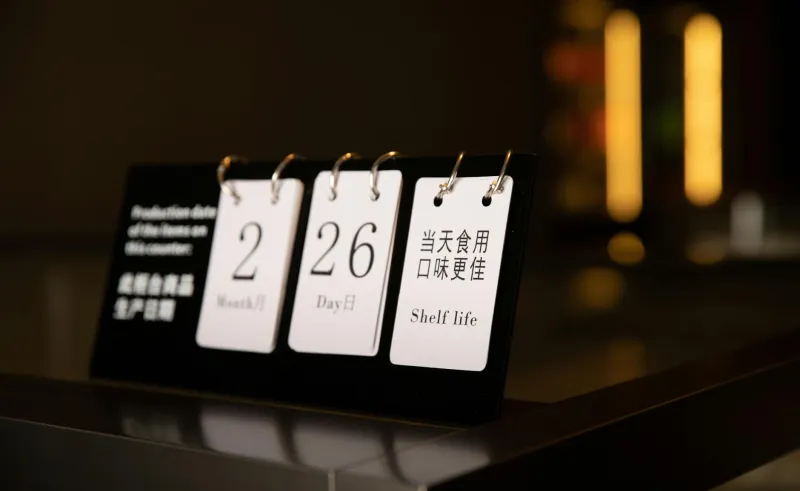
The Date on Your Milk Carton Was Put There for Grocery Stores, Not for You
At some point this week, you will probably open a refrigerator, pick up a carton of milk or a container of yogurt, check the date on the side, and make a decision based entirely on what that date says. If it's tomorrow, you might hesitate. If it passed yesterday, you might pour it down the drain without even smelling it first.
Here's something worth knowing before you do that: the date you're reading was not put there to tell you whether the food is safe to eat. It was put there to help a grocery store manage its shelves.
The expiration date — or sell-by date, or use-by date, or best-by date, depending on what you're holding — is one of the most misunderstood labels in the American food system. It has no single legal definition at the federal level. It does not, in most cases, indicate the point at which food becomes dangerous. And its origins have almost nothing to do with food safety science and almost everything to do with supermarket logistics and consumer marketing in the early 1970s.
Where the Dates Actually Came From
Before the 1970s, date labeling on food products in the United States was inconsistent, voluntary, and largely aimed at manufacturers tracking their own inventory. Consumers generally used their senses — smell, sight, taste — to figure out whether something had gone bad. That system had worked for most of human history.
Then came the rise of the modern supermarket. As grocery chains grew larger and supply chains stretched longer, stores needed a way to manage stock rotation — to make sure older products were sold before newer ones arrived. Sell-by dates gave store employees a clear, visible signal: pull this item when the date passes and restock the shelf.
The dates were calculated backward from an estimated point of peak freshness, with a built-in buffer to ensure the product was still in good condition when a customer bought it and then had a few days to use it at home. They were, at their core, a logistical tool. A scheduling system for shelf management.
Consumers, however, saw those dates and drew a very different conclusion. If a date is printed on food, it must mean something about safety. That assumption was never corrected, never clarified, and in many cases was actively encouraged — because a consumer who throws out food and buys a replacement is, from a retail perspective, not a problem.
The Label Chaos Nobody Fixed
Here's where things get genuinely strange. In the decades since date labeling became widespread, the United States never established a federal standard for what those dates mean. The only federally regulated date label in the US applies to infant formula. Everything else — milk, meat, canned goods, deli items, frozen food — is governed by a patchwork of state laws, manufacturer preferences, and industry customs that vary so widely they essentially mean nothing consistent.
"Sell by" means the store should stop selling the item by that date. It says nothing about when you should stop eating it. "Best by" or "best if used by" indicates peak quality — flavor, texture, freshness — not safety. "Use by" is the closest thing to a safety-oriented label, but it's applied inconsistently across products and manufacturers.
The result is that two identical products from different brands can carry dates weeks apart, not because one spoils faster, but because the manufacturers calculated their buffers differently. A "sell by" date on milk is typically set about a week before the milk actually begins to turn. Most milk is still perfectly fine to drink several days after that date, provided it's been stored properly.
The Waste Problem Is Enormous
The consequences of this confusion are not abstract. The Natural Resources Defense Council has estimated that Americans throw away roughly 40 percent of the food supply — and date label misinterpretation is one of the leading drivers of household food waste. A 2019 study published in Waste Management found that a significant portion of consumers discarded food based solely on the date label, without any sensory evaluation at all.
In dollar terms, the average American family of four throws away somewhere between $1,500 and $2,000 worth of food per year. A meaningful chunk of that food was not spoiled. It was simply past a date that a manufacturer or retailer chose based on quality preferences and shelf-management goals, not on any scientific threshold for when the food becomes harmful.
This is not a small problem. It strains household budgets, generates enormous amounts of food waste, and puts unnecessary pressure on the supply chain — all because of a label system that was never designed to do the job consumers think it's doing.
So When Is Food Actually Bad?
This is the question date labels were supposed to answer, but largely don't. The honest answer is that it depends on the food and how it's been handled. Properly refrigerated milk can remain safe to drink for up to a week after its sell-by date. Hard cheeses can last weeks or months beyond their labels if stored correctly. Canned goods are often safe for years after the printed date, with some quality degradation but no safety risk. Eggs stored in a refrigerator are typically safe three to five weeks after purchase, regardless of what the carton says.
The reliable indicators of spoilage — sour smell, visible mold, unusual texture or color — are the same ones humans have used forever. They work. And for most foods, they're a far more accurate guide than a date stamp calculated by a shelf-management algorithm.
A System Overdue for an Overhaul
There have been legislative efforts to bring some order to date labeling in the US. The Food Date Labeling Act, introduced in various forms in Congress, would standardize the system down to two labels: "best if used by" for quality and "expires on" for genuine safety. As of now, it hasn't passed.
In the meantime, the dates keep appearing on packaging, consumers keep misreading them, and billions of dollars worth of safe food keeps going into the trash every year. It's a strange outcome for a system that started as a stock-rotation shortcut for supermarket employees — and never really became anything more than that, no matter how much authority consumers gave it.
The next time you're standing in front of the refrigerator, carton in hand, it might be worth trusting your nose a little more than the label. It's been doing this job a lot longer, and it was actually designed for it.