Lunch Didn't Exist Until Factory Owners Decided It Was Good for Business
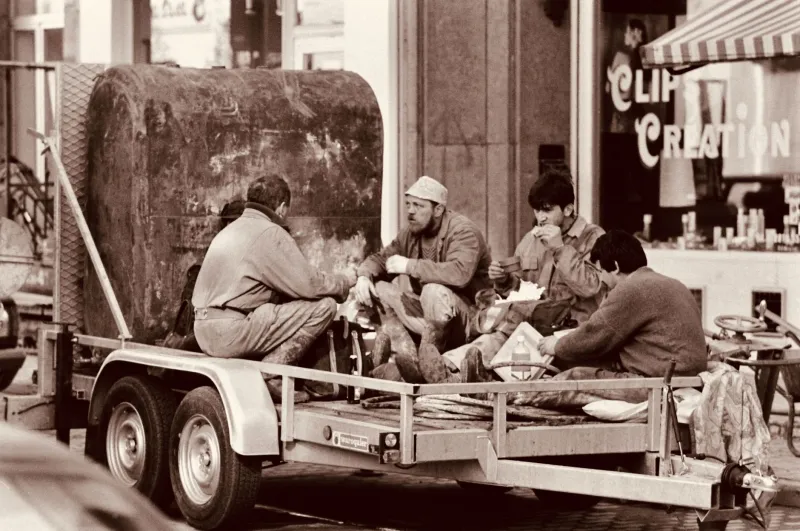
Before industrialization, most Americans didn't eat lunch — at least not anything resembling the structured midday meal we know today. It took railroad timetables, factory whistles, and a deliberate campaign by industrial employers to convince an entire nation that eating at noon was not just normal, but necessary.
The Two-Meal World That Came Before
For most of American history before the mid-1800s, people ate twice a day. Breakfast was early and substantial — the kind of meal that could carry you through a long morning of physical labor. The second meal, called dinner, came in the early afternoon, usually between noon and two o'clock, and was the largest meal of the day. Supper, if eaten at all, was a light affair taken in the early evening.
This wasn't laziness or poor planning. It was a schedule built around agrarian life. Farmers, tradespeople, and craftsmen worked close to home or in their own shops. They controlled their own time. When you got hungry, you ate. The concept of a meal break — a designated pause in a workday governed by someone else's clock — simply didn't apply.
There was no lunch because there was no one telling you when you had to stop.
The Factory Whistle Changed Everything
Industrialization broke that rhythm. As mills, factories, and manufacturing plants spread across the northeastern United States in the early 1800s, workers were no longer setting their own schedules. They were clocking in. And when you're operating machinery in a mill owned by someone else, you don't stop to eat when you feel like it — you stop when the whistle blows.
Early factory owners faced a practical problem: workers needed to eat, but letting everyone drift home to their midday dinner and wander back at their leisure was a productivity nightmare. The solution was simple and slightly coercive. The factory would sound a whistle at a set time — often noon — workers would have a fixed window to eat, and then the whistle would call them back.
That window was typically 30 minutes to an hour. It wasn't long enough to go home for a proper meal. It was barely long enough to eat anything substantial at all.
Out of this constraint, an entirely new eating occasion was born.
How the Railroads Standardized Noon
For a while, lunchtime wasn't even consistent from town to town. Different factories in different regions blew their whistles at different times. The noon meal might happen at 11:30 in one mill town and 1:00 in the next.
The railroads fixed that — though not because they cared about workers' meals. They cared about train schedules.
Before 1883, the United States operated on roughly 50 different local time standards. Each town set its clocks based on the local solar noon, which meant railroad timetables were a logistical disaster. Two cities 300 miles apart might be operating on times that differed by 40 minutes, and scheduling a train through multiple stops was nearly impossible without a unified system.
On November 18, 1883 — a date still sometimes called The Day of Two Noons — American railroads imposed four standardized time zones across the country. Suddenly, noon meant the same thing everywhere along a given corridor. Factories and businesses synchronized their schedules to the railroads. The noon lunch break became a national institution almost by accident, as a side effect of solving a train-scheduling problem.
Selling Workers on the Midday Meal
Once the structure existed, the food industry moved quickly to fill it.
Lunch counters appeared near factory gates. Pushcart vendors set up outside mill entrances. By the early 1900s, urban workers in cities like Chicago, New York, and Pittsburgh had access to a growing ecosystem of quick, cheap midday food — sandwiches, soups, pies — all designed to be consumed within a 30-minute break and cost only a few cents.
The word lunch itself had existed for years as a casual term for a light snack, but it took on new formality and cultural weight during this period. By the 1920s, employers were actively promoting the lunch break as a health benefit. Industrial efficiency researchers — the same people who gave us time-and-motion studies and assembly line optimization — began publishing findings claiming that workers who ate a proper midday meal were more productive in the afternoon than those who didn't.
In other words, factory owners encouraged workers to eat lunch because it was good for output. The midday meal wasn't a gift. It was an investment.
Why the Rest of the World Eats Differently
It's worth noting that this American model of a short, fixed lunch break is not universal — and that contrast reveals just how constructed our version of the midday meal really is.
In Spain, Italy, and much of Latin America, the midday meal remains the largest and most social eating occasion of the day, often lasting two hours or more. Businesses close. Families gather. The afternoon is structured around eating, not squeezed into a gap between morning and afternoon shifts.
In France, the two-hour lunch break is protected by cultural expectation even as modern work culture erodes it. In Japan, the lunch period is brief but highly ritualized, with an emphasis on quality and presentation that has no American equivalent.
The American lunch — a sandwich eaten at a desk, a salad grabbed from a fast-casual counter, a meal finished in 20 minutes — is a direct inheritance of the factory system. We eat fast at noon because someone in a 19th-century mill decided that was the most efficient use of a worker's time.
The Meal That Wasn't Supposed to Exist
There's something quietly strange about the fact that one of America's three sacred daily meals was essentially invented by industrial management. Lunch isn't a product of hunger or tradition or cultural ritual — it's a product of the factory whistle and the railroad clock.
And yet here we are, buying $15 grain bowls and arguing about the best lunch spots near the office, as if the midday meal has always been part of the natural order of things.
It hasn't. Someone built it. And they built it so you'd get back to work on time.