Blowing Out Candles on a Birthday Cake Is a 2,000-Year-Old Religious Ritual Nobody Talks About
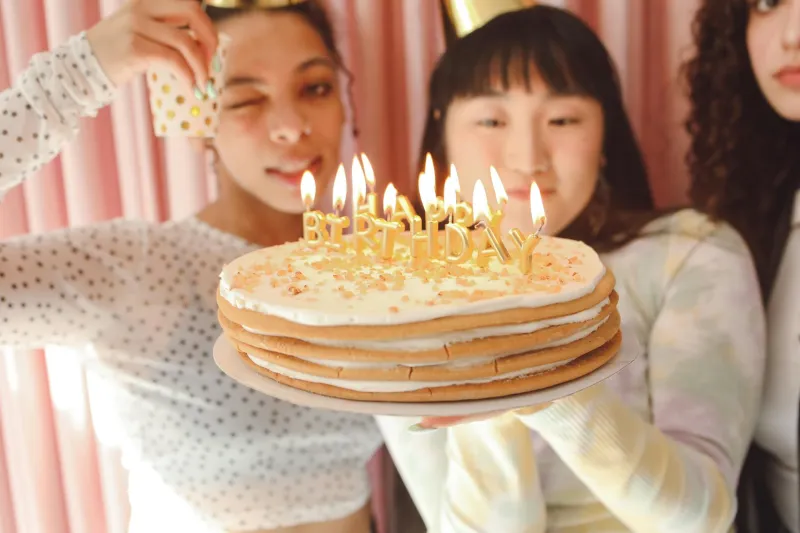
Blowing Out Candles on a Birthday Cake Is a 2,000-Year-Old Religious Ritual Nobody Talks About
Think about what actually happens at a birthday party. The lights go down. Everyone crowds around a single person. A flame is lit, a song is sung, and then the person at the center closes their eyes, makes a secret wish, and tries to extinguish every candle in one breath. The room cheers. It's so familiar it barely registers as strange anymore.
But step back for a second. That's a pretty unusual thing to do with a dessert.
The birthday candle tradition is one of those rituals so thoroughly absorbed into everyday American life that nobody stops to ask where it came from. The answer, it turns out, involves ancient Greek moon goddesses, German peasant superstitions, and a surprisingly long journey through European history before it landed on the frosted sheet cakes at every Chuck E. Cheese and backyard cookout across the country.
It Started With the Greeks, and It Was Definitely Religious
The earliest thread in this story leads back to ancient Greece, somewhere around the 6th century BCE. The Greeks worshipped Artemis, goddess of the moon, among many other deities. To honor her, worshippers would bring round honey cakes to her temple at Ephesus — round because the moon is round, which was exactly the kind of symbolism the Greeks loved.
Here's where the candles come in: those cakes were lit with small flames to make them glow like the moon itself. The flickering light was believed to carry prayers and offerings upward to the gods. Smoke from a flame was seen as a direct line of communication between the human world and the divine — a concept that wasn't unique to Greece and showed up in religious practices across the ancient world.
So from the very beginning, candles on a round cake weren't decoration. They were a spiritual act. An offering. A way of sending something to a higher power.
The Germans Made It Personal
Fast forward roughly a thousand years, and the candle-on-cake tradition reappears in a more recognizable form in 18th-century Germany. The practice was called Kinderfest, and it centered on a child's birthday in a way that feels surprisingly modern.
German families would place a large candle in the center of a birthday cake to represent "the light of life" — one candle for the child's entire existence, burning through the day. By the later 1700s and into the 1800s, the tradition had evolved: a candle for each year of the child's age, plus one extra candle representing the year ahead. The child was supposed to blow them all out in a single breath.
Why one breath? Because of a superstition that the smoke carried your wish to God — but only if the candles went out all at once. If you needed a second attempt, the wish was lost, or worse, something bad might follow. Evil spirits, it was believed, were especially drawn to children on their birthdays, when they were at a vulnerable transition point between one year of life and the next. The candles, the breath, the wish — all of it was protective in nature. A small ritual designed to ward off whatever was lurking.
It sounds dramatic now. At the time, in a world where childhood mortality was genuinely high, it probably didn't feel dramatic at all.
How It Crossed the Atlantic
German immigrants brought the Kinderfest tradition to America throughout the 18th and 19th centuries, and it gradually spread beyond German communities into broader American culture. By the late 1800s, references to birthday cakes with candles were appearing in American literature and diaries. By the early 20th century, the practice was common enough to be considered normal.
The industrialization of baking — and later, the rise of supermarket sheet cakes and grocery store bakeries — democratized the tradition completely. What had once required a home baker willing to make a special cake became something anyone could pick up for $14.99 with a name written in frosting. The candles came in bulk packs. Birthday supply aisles appeared in every drugstore. The ritual became a product.
The Wish Nobody Talks About
One piece of the tradition that almost never gets examined is the wish itself — the part where everyone goes quiet and the birthday person closes their eyes before blowing out the candles. That moment of silence and intention is a direct echo of the ancient practice of sending a prayer upward through flame and smoke. It's a personal offering, made privately, to whatever force a person believes might be listening.
Most Americans do it without thinking. Kids do it hoping for a puppy or a new video game. Adults do it half-jokingly, half-seriously. But the underlying structure of the moment — a flame, a wish, a breath, an exhale — is functionally identical to what Greek worshippers were doing at the temple of Artemis more than two millennia ago.
From Sacred to Sugar-Frosted
What's remarkable about the birthday candle's journey is how completely the spiritual origins disappeared while the ritual itself survived intact. The Greeks are gone. The German peasant superstitions about evil spirits have faded. But the candles remain, year after year, on every birthday cake from a toddler's first to a grandparent's eightieth.
Somewhere between ancient Athens and a party supply store in suburban Ohio, a pagan offering to the moon goddess became a song, a wish, and a round of applause. The meaning changed completely. The gesture didn't change at all.
That's the thing about rituals. They outlast the reasons behind them by centuries. And the next time someone puts a cake in front of you and tells you to make a wish, you'll know that you're doing something people have been doing, in one form or another, for a very long time.